
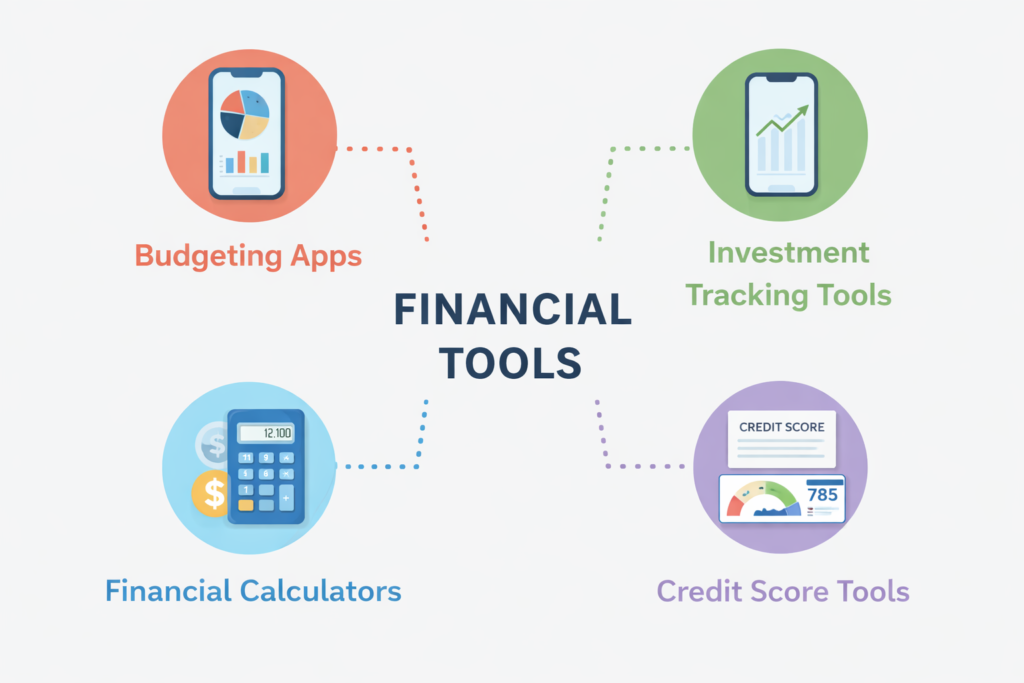
Managing your money effectively isn’t just about sticking to one method or tool anymore. In our digital age, personal finance has transformed into a blend of various systems that work hand in hand: budgeting apps, financial calculators, investment trackers, and educational resources.
Each of these tools has its own unique role, but when you combine them, they form a robust framework that enhances your financial awareness, helps you build wealth, and supports better decision-making over time.
This guide pulls everything together. It’s crafted to help you see how different financial tools can fit into your life and how to use them strategically to lay down a solid financial foundation.
Why Financial Tools Matter More Than Ever
Back in the day, managing money meant manual tracking, spreadsheets, and a lot of guesswork. Nowadays, financial tools take care of much of that, making it simpler to grasp your finances in real time.
But just having access to these tools isn’t enough. The real benefit comes from knowing how to use them in harmony.
Budgeting apps help you keep your spending in check. Investment tools assist you in growing your money. Financial calculators aid in planning for the future. Educational content fosters the mindset you need to stay on track.
When you bring all these elements together, you create a comprehensive financial system.
Budgeting Tools: The Foundation of Financial Control
Everything begins with getting a grip on your cash flow. If you’re not aware of where your money is going, it’s tough to make any real improvements to your financial situation.
That’s where budgeting tools come in—they offer clarity by keeping track of your income and expenses, categorizing your transactions, and showing you how your money is allocated each month.
Today’s apps do more than just track your spending. They analyze your habits and provide insights that can help you tweak your spending over time.
If you’re curious about some of the best tools out there, check out our guide on the top free budgeting tools to help you manage your finances. We compare various platforms designed to make personal budgeting a breeze.
Remember, budgeting isn’t about limiting yourself; it’s about gaining awareness. Once you have a clear picture of your spending, you can take charge of your financial choices.
Financial Calculators: Planning Your Future
While budgeting tools keep you grounded in the present, financial calculators are all about looking ahead.
These handy tools let you simulate different financial scenarios, estimate how your investments might grow, and assess the long-term effects of your decisions.
For instance, you can figure out how much you need to save each month to hit a financial target, or see how interest will impact a loan over time.
If you’re interested in learning more about how these calculators work, our article on how online financial calculators can help you make smarter money choices breaks down how they simplify complex financial ideas into easy-to-understand projections.
Financial calculators are particularly valuable because they transform abstract numbers into clear, actionable insights.
Investment Tracking Tools: Keeping an Eye on Your Growth
When you dive into the world of investing, keeping tabs on your portfolio is crucial.
Investment tracking tools make it easy to monitor your performance, analyze how your assets are allocated, and see how your investments change over time.
Rather than hopping between different platforms, these tools offer a handy dashboard that displays your entire portfolio all in one spot. If you’re just getting started, check out our guide on the best investment tracking apps for beginners. We review tools specifically designed to help investors stay organized and focused on achieving long-term growth.
Tracking your investments not only helps you stay organized but also builds discipline by keeping your eyes on the long-term prize.
Compound Interest Tools: Grasping the Art of Wealth Building
One of the key concepts in personal finance is compound interest. Understanding how your money can grow over time can truly transform your financial game plan.
Compound interest calculators let you visualize how your investments can flourish based on time, contributions, and returns. They illustrate how even small, regular investments can lead to impressive results down the line.
If you’re eager to learn how to make the most of these tools, our guide on using compound interest calculators to plan for long-term wealth walks you through simulating investment growth and crafting realistic financial plans.
This kind of planning is vital for anyone looking to build wealth over the long haul.
Credit Monitoring Tools: Safeguarding Your Financial Well-Being
While building wealth is crucial, keeping a solid financial profile is just as important.
Credit monitoring tools are your allies in tracking your credit score, spotting changes in your credit report, and catching potential issues before they escalate. A solid credit score can open doors to better financial products and help lower your borrowing costs over time.
If you’re curious about the top tools out there, check out our article on the best credit score monitoring tools and why they’re essential. It offers a comprehensive look at platforms that keep you updated on your credit health.
Monitoring your credit isn’t just about dodging problems—it’s about unlocking more financial opportunities.
Financial Planning Templates: Organizing Your Strategy
Not every financial tool has to be digital. Financial planning templates are still one of the best ways to get your finances in order.
These templates help you set up budgets, track your savings goals, keep an eye on debt, and calculate your net worth. They’re particularly beneficial for those who like a hands-on approach to managing their finances.
If you’re ready to dive into these resources, our guide on free financial planning templates you can start using today features several templates designed to help you streamline your financial life.
Templates offer flexibility and let you tailor your financial system to fit your unique goals.
Budgeting Data and Behavioral Insights
Today’s financial tools go beyond just crunching numbers; they’re designed to help you grasp your spending behavior.
Budgeting apps sift through your data to spot patterns in how you spend, offering insights that empower you to make smarter choices.
These insights can shine a light on unnecessary expenses, uncover trends, and suggest ways to improve your financial habits.
Curious about how this all works? Check out our article on how budgeting apps leverage data to enhance your spending habits. It explains how these data-driven tools can really change your financial game.
Getting a handle on your behavior is one of the most effective ways to boost your financial health.
Learning Resources: Building Your Financial Mindset
But remember, tools alone won’t cut it. Achieving financial success also hinges on your mindset.
Educational resources like podcasts, videos, and articles are essential for building the knowledge and discipline you need to manage your money wisely. Financial podcasts, in particular, offer ongoing education and introduce you to various financial strategies.
If you’re on the hunt for valuable content, check out our guide on the best financial podcasts to enhance your money mindset. We’ve highlighted some of the most helpful shows for learning about finances.
Continuous learning reinforces good habits and keeps you aligned with your long-term goals.
How to Combine All These Tools Effectively
Every financial tool has its own role, but their true strength lies in how you blend them into a cohesive system.
Here’s a simple example of an effective system:
You start with budgeting tools to keep tabs on your spending and spot savings opportunities.
Then, you use financial calculators to plan how those savings can grow over time.
- You invest regularly and track your portfolio with investment apps.
- You keep an eye on your credit to ensure your financial health.
- You utilize templates to organize your goals and monitor your progress.
And you keep learning through educational content.
Final Thoughts
Building strong financial habits does not happen overnight. It requires consistency, awareness, and the right tools.
Budgeting apps, financial calculators, investment trackers, and educational resources each play a role in improving your financial life.
When used together, they create a system that helps you understand your money, plan your future, and stay disciplined over time.
The key is not to use every tool at once, but to start simple and gradually build a system that works for you. Over time, this approach can lead to greater financial clarity, stronger decision-making, and long-term financial success.