
Managing personal finances used to be a bit of a chore, often relying on manual tracking. People would jot down their expenses in notebooks or try to recall their monthly spending from memory. While these methods had their merits, they often fell short and were prone to mistakes.
Fast forward to today, and budgeting apps have completely changed the game when it comes to managing money. These handy tools analyze financial data to spot spending patterns, categorize expenses, and offer insights that empower users to make smarter financial choices. Instead of playing a guessing game with their monthly expenses, budgeting apps automatically sort financial information and display it in user-friendly dashboards. This clarity helps users grasp their financial habits and pinpoint areas for improvement.
In this article, we’ll dive into how budgeting apps leverage data to enhance spending habits and why they’ve become indispensable in today’s financial landscape.
The Role of Data in Personal Finance
Data is key to helping individuals understand their financial habits. When spending information is logged consistently, patterns start to emerge. These patterns show how money flows across various aspects of life, like housing, food, transportation, and entertainment.
Budgeting apps gather this data from bank accounts, credit cards, and manual entries. Once collected, the apps categorize transactions and analyze them to provide valuable insights. This process enables users to see exactly how much they’re spending in each category each month. For many, just having this visibility can spark significant changes in behavior. For instance, someone who thinks they don’t spend much on dining out might be surprised to find that restaurant bills actually take up a hefty chunk of their budget.
By turning raw financial data into clear insights, budgeting apps empower users to make more informed financial decisions.
Automatic Expense Categorization
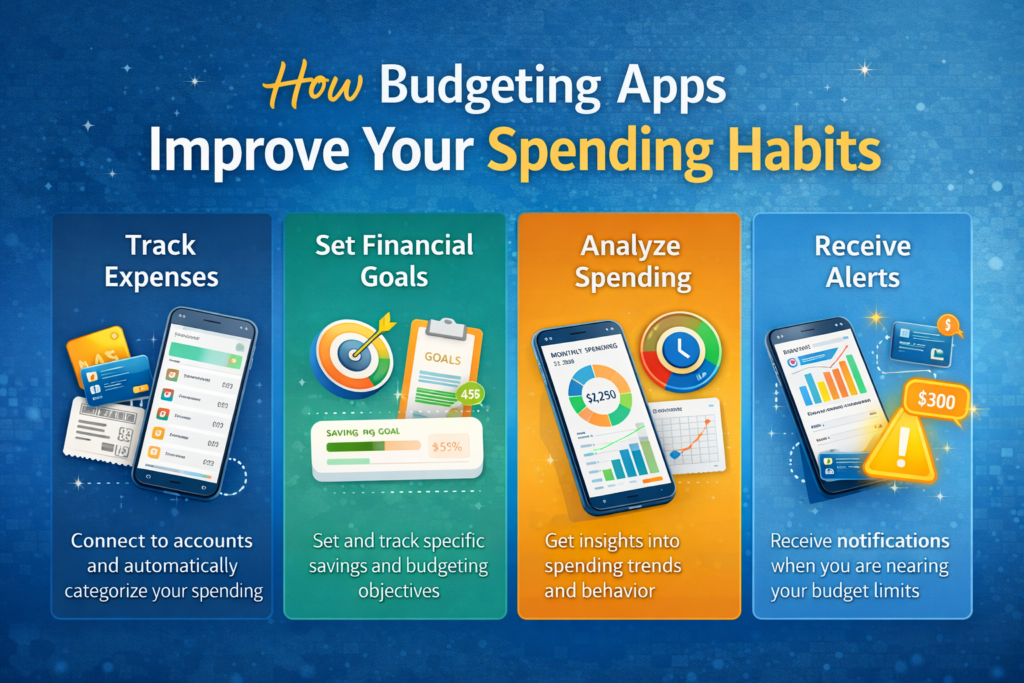
One of the standout features of budgeting apps is their ability to automatically categorize expenses. Whenever a transaction pops up in your bank account, the app takes a look at the merchant details and sorts the purchase into the right category.
You’ll often find categories like groceries, transportation, subscriptions, utilities, and entertainment. This automated approach takes the hassle out of manual tracking and keeps your financial data neatly organized. As time goes on, the app picks up on user corrections, becoming more precise in how it categorizes expenses. This ongoing refinement means that budgeting apps get better and more efficient the longer you use them.
By automatically sorting your spending data, these tools help you quickly spot which areas are eating up the biggest chunks of your income.
Spending Pattern Analysis
Budgeting apps do more than just keep tabs on your expenses; they also dive into your financial data to uncover patterns in your spending habits.
For instance, many apps create reports that show how your spending shifts from month to month. These reports can reveal trends like rising subscription costs or seasonal spikes in spending.
This kind of analysis gives users insight into whether their financial habits are getting better or worse over time. Additionally, spending analysis can uncover chances for optimization. If someone finds they’re consistently overspending in certain categories, they can tweak their budget or cut back on unnecessary expenses.
This process gradually fosters better financial discipline and encourages more mindful spending.
Personalized Financial Insights
These days, many budgeting apps are leveraging smart algorithms to offer tailored recommendations based on your spending habits.
You might find suggestions like:
- Cutting back on subscription services
- Tweaking your budget categories
- Boosting your savings contributions
- Paying off high-interest debt
Since these recommendations are rooted in actual financial data, they often feel more relevant and actionable compared to generic financial advice.
As time goes on, these insights empower users to fine-tune their financial strategies and cultivate better money management habits.
Goal Tracking and Financial Motivation
Another key feature of budgeting apps is goal tracking. Users can set financial objectives, whether it’s building an emergency fund, saving for a big purchase, or tackling debt.
The app keeps tabs on your progress toward these goals by analyzing your income and spending patterns. Watching your progress can be incredibly motivating. Instead of feeling like your money just vanishes each month, you can see how those small improvements add up over time. Goal tracking also helps reinforce good habits. For instance, if someone regularly saves a portion of their income, the app will show their growing savings, encouraging them to keep it up.
And for those who like a more structured approach alongside their apps, financial planning resources like free templates can also be a great way to organize savings goals and track progress in a more hands-on manner.
Budget Alerts and Spending Limits
A lot of budgeting apps let users set spending limits for different categories. When you get close to that limit, the app will send you alerts or notifications.
These alerts are super helpful for keeping you on track with your budget and avoiding overspending. For example, if you decide to set aside $200 a month for dining out, the app might give you a heads-up when you hit 75% or 90% of that limit. These timely reminders help you stay aware of your spending in the moment, rather than finding out after the fact.
Over time, this approach encourages users to develop more mindful and controlled spending habits.
Data Visualization and Financial Awareness
Budgeting apps usually display financial data through charts, graphs, and dashboards. These visual tools make it much easier to digest complex financial information.
For instance, pie charts can illustrate how your monthly expenses break down across different categories, while line graphs can show your spending trends over time. Visual representations of data help users quickly understand their financial situation without having to sift through spreadsheets or raw numbers. This clarity boosts financial awareness and makes it simpler to spot areas where you can improve.
Grasping how money flows in and out of your accounts is a crucial step toward building solid financial habits.
Integration With Other Financial Tools
Budgeting apps often fit into a broader network of financial tools. Many people like to pair their budgeting platforms with other helpful resources, such as investment trackers or financial calculators.
For instance, once users spot areas where they can cut back on spending, they might choose to funnel those savings into investments. Beginner-friendly investment tracking apps can then assist in keeping an eye on portfolio growth and monitoring long-term performance. In a similar vein, financial calculators can help estimate how those extra savings contributions might grow over time.
This blend of budgeting, planning, and investment tools creates a more comprehensive approach to managing finances.
Why Budgeting Apps Are Effective
The power of budgeting apps comes from their ability to turn financial data into valuable insights.
Rather than relying on memory or guesswork, users can access precise, real-time financial information. This clarity leads to better decision-making, fosters accountability, and aids in long-term financial planning. When individuals grasp their financial habits, they’re much more likely to develop behaviors that promote financial stability.
Over time, regularly using budgeting apps can result in less debt, more savings, and a boost in financial confidence.
Final Thoughts
Budgeting apps have revolutionized personal finance by using data to improve spending habits. Through automated tracking, expense categorization, and financial analysis, these tools provide valuable insights into everyday financial behavior.
By transforming financial data into actionable information, budgeting apps help users make more intentional decisions about their money.
For individuals looking to improve their financial discipline and gain better control over their spending, using a budgeting app can be one of the most effective steps toward achieving long-term financial stability.