
Introduction
Life rarely follows a perfect financial plan. Unexpected expenses, opportunities, or emergencies can appear at any moment. When savings are not enough to cover a large cost, many people turn to borrowing. One of the most common options is a personal loan.
Personal loans are widely available, relatively simple compared to other financial products, and flexible in how the funds can be used. However, just because they are common does not mean they are risk-free. Understanding exactly how a personal loan works — including interest, fees, repayment structure, and impact on your credit — is essential before signing any agreement.
Knowing the mechanics behind a personal loan helps you use it as a tool, not a trap.
What Is a Personal Loan?
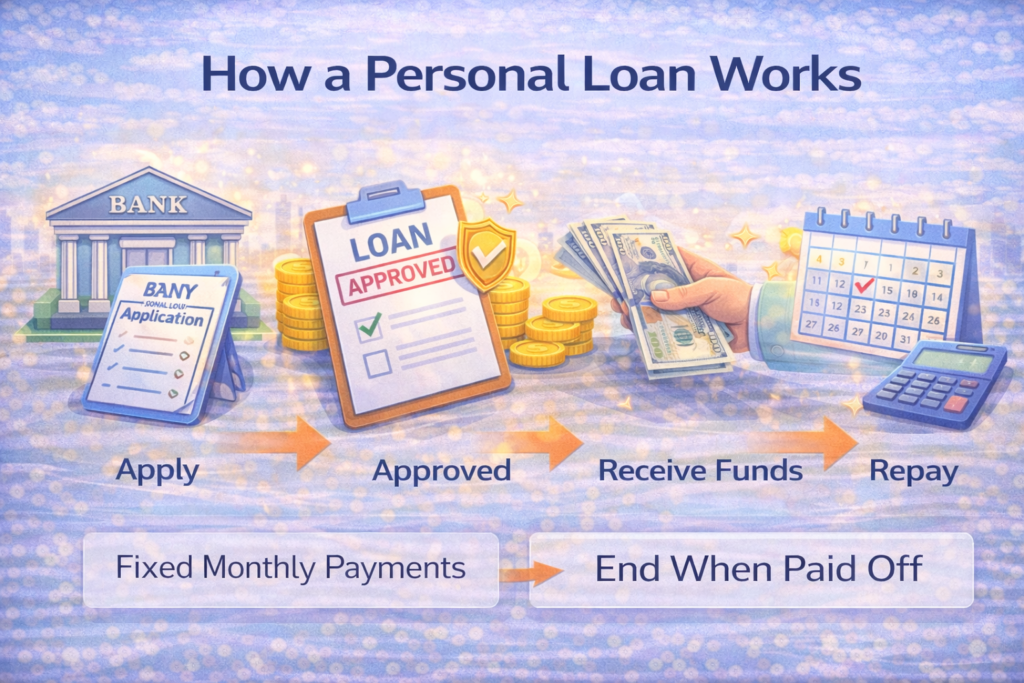
A personal loan is a type of installment loan. You borrow a fixed amount of money and repay it over time through regular monthly payments. Unlike credit cards, which allow revolving borrowing, personal loans are structured with a clear beginning and end.
Most personal loans are unsecured, meaning you do not have to provide collateral such as a house or car. Instead, lenders evaluate your credit history, income, and overall financial profile to determine whether you qualify and what interest rate you receive.
The Consumer Financial Protection Bureau (CFPB) explains that personal loans involve fixed payments over a set period, making them easier for many consumers to budget for compared to revolving credit:
How Personal Loans Work
Once approved, the lender gives you the loan amount in one lump sum. From that point, repayment begins based on the agreed schedule.
Each monthly payment usually includes:
- A portion of the loan principal
- Interest charges
Because payments are typically fixed, you know exactly how much you owe each month and when the loan will be paid off, assuming you make payments on time.
This predictability is one of the main differences between personal loans and credit cards, where balances and minimum payments can change monthly.
Interest Rates and APR
The cost of borrowing with a personal loan depends largely on your interest rate. Lenders assign rates based on risk. Factors that influence your rate include:
- Credit score
- Income level
- Existing debt
- Employment stability
The Federal Trade Commission (FTC) emphasizes the importance of understanding the APR (Annual Percentage Rate), which includes both interest and certain fees, giving a fuller picture of the loan’s cost.
A lower APR means a cheaper loan overall. Even a small difference in rate can significantly change how much you pay over time.
Loan Terms and Repayment Periods
Personal loan terms usually range from 12 months to 84 months. Shorter loan terms lead to higher monthly payments but less total interest paid. Longer terms reduce the monthly burden but increase the total cost of borrowing.
Choosing the right term requires balancing affordability with long-term cost. A payment that is too high can strain your budget, but stretching the loan unnecessarily may result in paying much more interest.
Secured vs Unsecured Personal Loans
Most personal loans are unsecured, but some lenders offer secured options backed by collateral. Secured loans may offer lower interest rates because they reduce risk for the lender.
Experian explains that unsecured loans depend heavily on creditworthiness, while secured loans may require assets that the lender can claim if payments stop: Read the full article here.
While secured loans can be cheaper, they involve greater personal risk.
Common Reasons People Use Personal Loans
Personal loans can be used for many purposes, such as:
- Debt consolidation
- Medical bills
- Major purchases
- Emergency expenses
- Home improvements
Debt consolidation is one of the most popular uses. Combining multiple high-interest credit card balances into a single loan with a lower rate can simplify payments and reduce interest. However, success depends on not accumulating new credit card debt afterward.
Fees to Watch For
Personal loans may include fees beyond interest. These can include:
- Origination fees
- Late payment fees
- Insufficient funds fees
The CFPB advises reviewing all terms carefully before agreeing to a loan to understand the full cost.
Even small fees can add up over time.
When a Personal Loan Makes Sense
A personal loan can be helpful when:
- You have a clear repayment plan
- The interest rate is lower than other debts
- The expense is necessary and planned
It is less suitable for lifestyle spending or recurring expenses that could create ongoing debt.
Risks of Taking a Personal Loan
Borrowing money always involves risk. Missing payments can damage your credit and lead to extra fees. Because payments are fixed, your income must be stable enough to support them consistently.
Defaulting on a loan can have long-term financial consequences.
Personal Loans vs Credit Cards
Personal loans offer structure and predictable repayment. Credit cards provide flexibility but often come with higher interest rates.
If you need a lump sum and a defined repayment schedule, a personal loan may be more appropriate. If you need ongoing access to smaller amounts, a credit card might be better — provided you manage it carefully.
Impact on Your Credit
Applying for a loan results in a credit inquiry, which may cause a small temporary dip in your score. Making payments on time can help build positive credit history.
However, missed payments can significantly harm your credit.
Final Thoughts
A personal loan can be a useful financial tool when used responsibly. It offers structure, predictable payments, and flexibility in how funds are used.
Before borrowing, compare offers, review the APR, understand all fees, and ensure the monthly payment fits your budget. Used wisely, a personal loan can help you manage large expenses without turning into long-term financial stress.