
Introduction
Credit cards can be incredibly handy financial tools, but they also come with the risk of falling into long-term debt. Many folks start using a credit card for its convenience or in case of emergencies, only to find themselves juggling balances, paying interest every month, and feeling like they’re stuck in a financial rut.
The real issue isn’t the card itself; it’s all about how you use it.
When you learn to manage a credit card wisely, you can build your credit, rack up rewards, and keep your finances in check — all without paying a cent in interest. This guide will walk you through the practical strategies that responsible cardholders use to stay out of debt.
Why Credit Card Debt Happens So Easily
Credit cards can make spending feel less tangible. Since there’s no immediate hit to your bank account, it’s all too easy to overspend. And with interest rates often soaring above 20% APR, even small balances can snowball quickly.
Here are some common habits that can lead to debt:
- Only making the minimum payment
- Using the card for things you can’t really afford
- Not keeping track of your spending
- Ignoring the statement balance
- Carrying balances month after month
Even those who are usually financially savvy can find themselves in debt without a solid plan.
Rule #1: Only Charge What You Can Pay Off This Month
This is the golden rule.
Think of your credit card as a debit card with perks, not a loan. Before you make a purchase, ask yourself:
“Could I pay for this with cash right now?”
If the answer is no, then it’s best to leave it off the card — unless it’s a genuine emergency.
This way of thinking helps you avoid the “future income trap,” where you assume you’ll pay it off later but end up never quite catching up.
Rule #2: Always Pay the Statement Balance in Full
Your statement balance is the amount owed at the end of your billing cycle. Paying this amount in full by the due date allows you to use the card interest-free because of the grace period.
If you pay less than the statement balance:
- Interest starts accruing
- Future purchases may lose the grace period
- Debt begins to snowball
This is why understanding grace periods is critical (covered earlier in this category). Paying in full is what separates smart credit use from debt dependency.
Rule #3: Keep Your Credit Utilization Low
Credit utilization measures how much of your available credit you are using. It is one of the biggest factors affecting your credit score.
Example:
- Credit limit: $2,000
- Balance: $1,000
- Utilization: 50%
Experts recommend keeping utilization below 30%, and ideally under 10% for the best score impact.
High balances increase both financial risk and your chances of carrying debt. Lower balances make full payments manageable.
Rule #4: Treat Minimum Payments as a Warning Sign
Minimum payments are designed to keep you in debt. They are not a strategy — they are a fallback.
If you ever find yourself paying only the minimum, it signals:
- Spending exceeded your budget
- Your balance is becoming unmanageable
- You’re at risk of long-term interest costs
This directly connects to what we covered earlier about how minimum payments keep you in debt — they stretch repayment over years while interest accumulates.
Rule #5: Track Every Purchase
Most people underestimate how much they charge to a credit card because purchases are spread out over weeks.
Use one of these methods:
- Weekly review of transactions in your banking app
- Budgeting app linked to your card
- Simple spreadsheet
- Setting spending alerts
Awareness prevents surprise balances and helps you stay within what you can repay.
Rule #6: Have a Plan for Large Purchases
Making big purchases can often lead to debt, so instead of making impulsive decisions:
- Figure out the total cost
- Check your bank balance
- Make sure you can pay it off by the next statement
- Think about waiting and saving up first
Promotional 0% APR offers can be beneficial in certain situations, but they need discipline and a solid payoff plan before the introductory period wraps up.
Rule #7: Use Your Card for the Right Reasons
Credit cards shine when used for:
- Everyday planned expenses (like groceries and gas)
- Online shopping (thanks to fraud protection)
- Travel (with rewards and protections)
- Building your credit history
However, they’re not the best choice for:
- Lifestyle upgrades that stretch your budget
- Ongoing financial struggles
- Continuously paying off other debts
Using credit to fill income gaps can trap you in a tough cycle.
What to Do If You’re Already Carrying a Balance
If you’re not starting fresh, don’t stress. Focus on:
- Stopping any new charges
- Paying more than the minimum
- Tackling the highest interest balances first
- Exploring balance transfer options if they make sense
Reducing debt is achievable, but it takes a structured approach rather than just wishing it away.
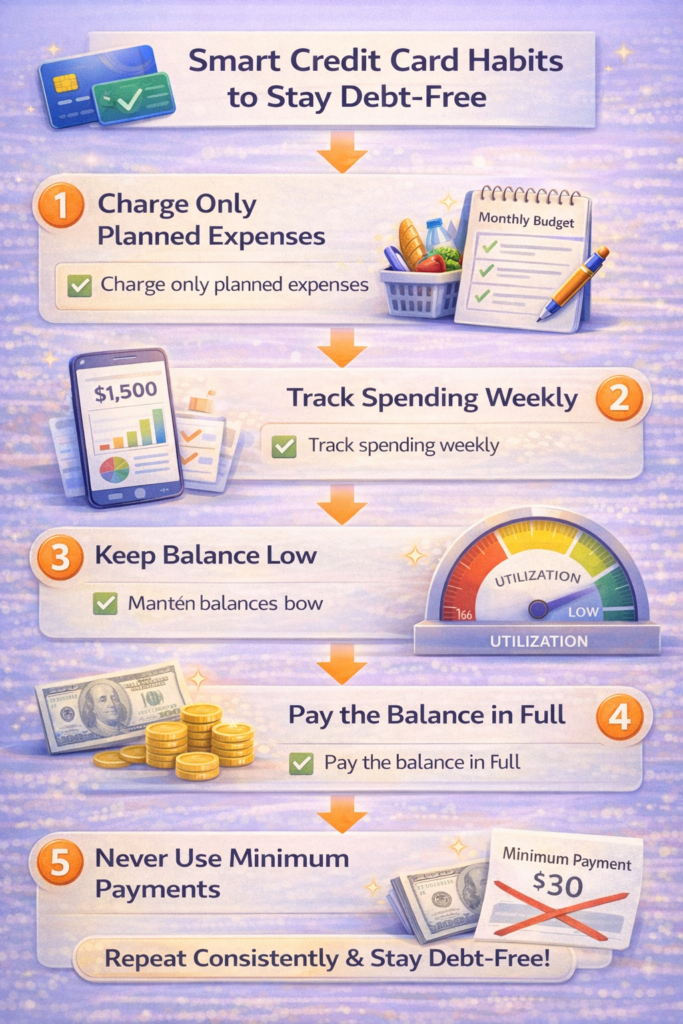
The Simple System Responsible Users Follow
Those who never find themselves in credit card debt typically stick to this straightforward system:
- Charge only what’s in your budget
- Track your spending weekly
- Keep your balances low
- Pay off the statement balance in full
- Avoid relying on minimum payments
It’s not rocket science — it’s all about consistent habits.
Final Thoughts
Credit cards aren’t inherently dangerous; it’s how you use them that matters.
When managed well, they can help you build credit, provide security, and offer rewards. But without a solid plan, they can quickly turn into high-interest debt.
The key difference is discipline:
- Think of your card as a payment tool, not a borrowing tool.