
Introduction
Choosing the right credit card can feel overwhelming. With so many options available, it’s easy to get stuck between two popular types: cash back credit cards and rewards credit cards. On the surface, both offer benefits for spending, but they work in different ways and are best suited for different types of users.
In this article, we’ll break down how each type works, compare their strengths and weaknesses, and help you decide which might be the better fit based on your financial habits and goals.
Understanding the differences will help you pick a card that actually benefits you — not just one that looks attractive in an advertisement.
What Is a Cash Back Credit Card?
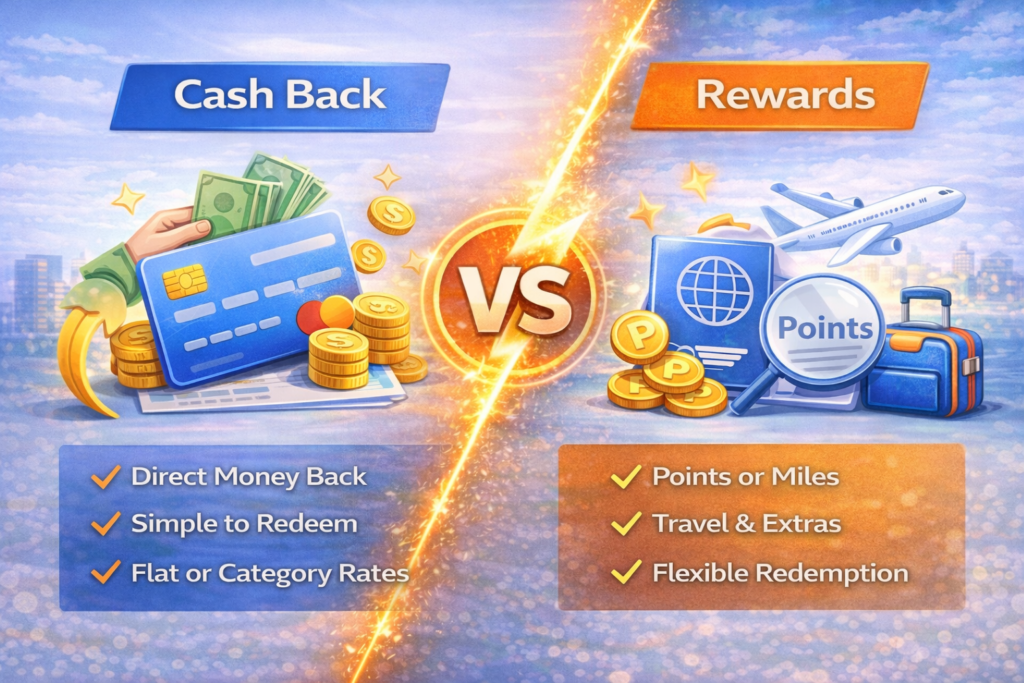
A cash back credit card is exactly what it sounds like: a card that gives you back a percentage of what you spend. For every dollar you spend on eligible purchases, you earn cash rewards.
These rewards can usually be redeemed in several ways:
- As a statement credit
- As a direct deposit into your bank account
- As a check or other redemption options
Typically, simple cash back cards might offer 1–2% on all purchases, but some offer higher rates in specific categories like groceries or gas.
According to the Consumer Financial Protection Bureau, cash back cards are a straightforward way to earn rewards without adding complexity to your financial life.
What Is a Rewards Credit Card?
Rewards credit cards earn points or miles instead of direct cash. These points can then be redeemed for:
- Travel (flights, hotels, rental cars)
- Gift cards
- Merchandise
- Statement credits
One of the most valuable aspects of rewards cards is flexibility, especially when points are redeemable for travel at a high conversion rate.
For example, the U.S. News Best Credit Cards ranking notes that travel rewards cards often offer the best value if you know how to use airline and hotel transfer partners effectively.
However, the value of points can vary widely. Some points travel further, and understanding the best way to use them often requires a bit of strategy.
How Cash Back and Rewards Earnings Work
Cash Back
Cash back earnings are typically simple and consistent. If your card offers 2% cash back on all purchases, you always know what you’ll earn: $2 for every $100 spent.
Some cards also offer tiered rewards, such as:
- 3% on groceries
- 2% on gas
- 1% on everything else
This structure can be powerful if your spending habits align with the bonus categories.
Rewards Points
Rewards cards often use a points system that isn’t as straightforward.
For example:
- You may earn 3 points per dollar on travel
- 2 points per dollar on dining
- 1 point per dollar on all other purchases
From there, the value of points can vary depending on how you redeem them — especially for travel.
Bankrate explains that point values can differ widely depending on whether you redeem for travel, cash back, or gift cards, with travel redemptions often offering higher value per point.
Simplicity vs Strategy
Cash back cards win on simplicity. You earn, and you redeem — no complicated rules or redemption partners.
Rewards cards, especially travel-focused ones, require more strategy. You might need to understand airline alliances, hotel loyalty programs, or transfer partners. For people who like planning trips and maximizing every point, this can be rewarding. For others, it can be overwhelming.
According to Experian, rewards cards often come with great benefits — but also with terms that require careful attention to avoid unexpected costs.
Travel Benefits and Perks
Most high-end rewards credit cards offer travel-related perks such as:
- Travel insurance
- Free checked bags
- Airport lounge access
- No foreign transaction fees
These can add significant value beyond the rewards themselves. The NerdWallet guide to travel credit cards highlights lounge access and travel protection as key perks that can significantly improve the card’s value.
Cash back cards rarely offer these extras, focusing instead on raw cash rewards. That’s perfect for everyday spending but may lack travel-related perks.
Annual Fees: What You Should Know
Some rewards cards, especially those with premium travel benefits, charge annual fees. These can range from moderate ($95–$150) to high ($450+), depending on the card’s perks.
Cash back cards often have no annual fee, making them attractive to people who want rewards without extra costs.
When evaluating a card with a fee, consider how much value you expect to get. If the rewards and benefits outweigh the fee, it may still be worth it.
The Consumer Financial Protection Bureau notes that you should always consider whether the rewards justify the costs associated with the card.
Everyday Spending: Which Works Better?
For everyday purchases like groceries, gas, and bills, cash back cards often provide consistent value without extra effort. You earn rewards automatically and can redeem them flexibly.
Rewards cards can offer higher returns in certain categories, but only if you plan to take full advantage of redemption options.
A Cash Back vs Rewards comparison from U.S. News suggests that users who spend heavily in bonus categories or travel frequently may benefit more from rewards cards — if they can use the points wisely.
Responsible Use Matters
Both card types require responsible use. Carrying a balance and paying high interest can negate any rewards you may earn.
Make sure you:
- Pay your statement in full each month (when possible)
- Keep track of due dates
- Avoid overspending to “chase rewards”
Interest charges can quickly outweigh any benefits, especially if you carry a balance.
The Federal Trade Commission emphasizes that credit cards are best used as a convenience — not as a way to borrow money without planning for repayment.
Who Should Choose Cash Back
Cash back cards are ideal for people who:
- Prefer simplicity
- Want straightforward value
- Avoid annual fees
- Spend money in everyday categories
They are also a great first card for people new to credit rewards.
Who Should Choose Rewards Cards
Rewards cards may be a better fit for people who:
- Travel often
- Enjoy maximizing points and perks
- Are comfortable with more complex redemption systems
- Value premium travel benefits
However, it’s essential to ensure that you will use the card’s benefits enough to offset its annual fee.
Final Thoughts
There is no universal answer to which card is “best.” Cash back cards offer simplicity and flexibility, while rewards cards offer opportunities for higher value and premium perks.
The right choice depends on your lifestyle, spending habits, and financial goals. Understanding your own needs — not just chasing the biggest headline bonus — will lead to better long-term financial decisions.
Pingback: Credit Card Fees Explained (Annual, Late, Foreign, and More)