
Introduction
If you have ever dealt with credit card debt, you know how quickly interest can increase your balances. A single month of missed payments or overspending can lead to a long-term financial burden. This is where a balance transfer credit card can help.
A balance transfer card lets people move existing credit card debt to a new card that often has a lower interest rate. Many use these cards to manage their debt better, lower interest costs, and gain time to pay off balances.
However, while balance transfer offers can be useful, they come with rules, fees, and deadlines. It’s important to understand how they work before deciding if one is right for you.
What Is a Balance Transfer?
A balance transfer is the process of moving debt from one credit card to another. Instead of owing money to your old card issuer, you now owe the new one. People typically do this to take advantage of a lower interest rate.
Many balance transfer cards offer a promotional 0% APR for a limited time. During this period, you may not pay interest on the transferred balance.
This gives you extra time to pay off your debt faster without interest increasing your total.
How a Balance Transfer Credit Card Works
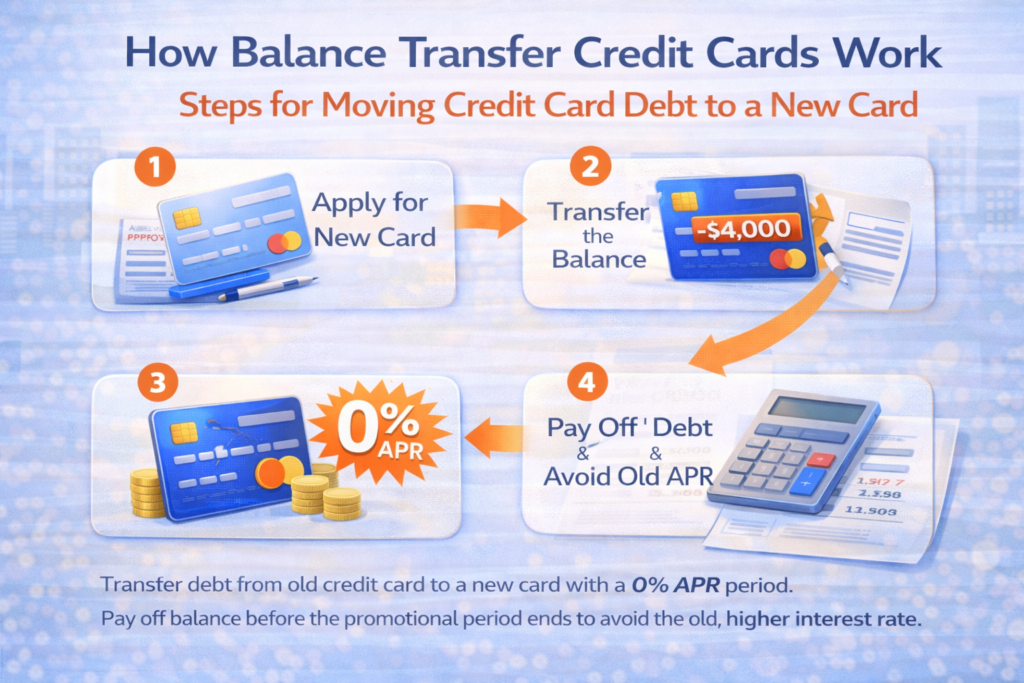
The process generally starts with an application for a credit card that has a balance transfer promotion. If you get approved, you can request to transfer balances from your existing cards. The new card issuer pays off the debt on your old card directly.
Your balance then appears on the new card, along with any applicable fees. From there, you make payments on the new card instead of the old one.
Your goal is to pay down as much of the balance as possible before the promotional period ends.
The Promotional APR Period
The Promotional APR Period One of the key features of balance transfer cards is the introductory APR period. This typically lasts between 6 and 21 months, depending on the card. During this time, you might not be charged interest on the transferred balance.
This means more of your payment goes toward reducing your actual debt rather than paying interest.
However, once the promotional period ends, the regular APR applies to any remaining balance. This rate can be high, so having a plan is important.
Balance Transfer Fees
Balance Transfer Fees Balance transfers usually come with fees. Most cards charge a fee, typically around 3% to 5% of the amount transferred.
For instance, transferring $5,000 with a 3% fee would cost $150. This fee is added to your balance. Even with the fee, the total cost may still be lower than what you would pay in interest on your old card.
But always calculate whether the savings are worth the fee.
Who Balance Transfers Are Best For
Who Balance Transfers Are Best For Balance transfer cards can help those who have:
– Good or improving credit
– A clear plan to pay off debt
– High-interest credit card balances
They may not be suitable for those who keep adding new debt or struggle to make consistent payments.
The Importance of a Repayment Plan
A balance transfer is not a solution on its own. It’s a tool that works best when combined with discipline. If you only make minimum payments and don’t reduce the balance, you could find yourself in the same position once the promotional period ends.
Creating a plan to pay off the balance within the 0% APR window is key. Dividing the total balance by the number of months in the promotion can help you set a target payment.
Risks to Watch Out For
Balance transfers have potential downsides. Missing a payment can sometimes cancel the promotional rate, causing the regular APR to kick in early. Using the card for new purchases can complicate things, too.
Some cards apply payments to lower-interest balances first, causing new purchases to build up interest. Understanding the card’s terms can help you avoid these issues.
Credit Score Impact
Opening a new card and transferring a large balance can affect your credit score in various ways. A new account may lower the average age of your credit history.
However, if the transfer reduces your credit utilization on older cards, it could help your score. The long-term effect often depends on how responsibly you manage the new account.
When a Balance Transfer Makes Sense
A balance transfer can be a wise choice if it helps you save money on interest and pay off debt faster.
It works best when you stop adding new debt, follow a repayment plan, and understand the terms of the offer.
Final Thoughts
A balance transfer credit card can be a useful tool for managing credit card debt, but it is not free money. It gives you time and possibly lower costs, but responsibility and planning are crucial. Used correctly, it can help you reduce debt and regain financial control.
Used carelessly, it can lead to more debt once the promotional period ends. Understanding how balance transfers work lets you decide whether this strategy fits your financial situation.
Pingback: Credit Card Fees Explained (Annual, Late, Foreign, and More)