
Introduction
When you open a credit card account, one of the first numbers you will see is your credit limit. Many people view this number simply as a spending cap, but it is much more than that. Your credit limit plays an important role in how lenders evaluate your financial behavior and how your credit score is calculated.
Understanding what a credit limit is and how it works can help you use credit more responsibly, avoid common mistakes, and strengthen your financial profile over time.
What Is a Credit Limit?
A credit limit is the maximum amount of money a lender allows you to borrow on a credit card. It represents the upper boundary of how much you can charge to the card at any given time.
For example, if your credit limit is $1,000, you can make purchases, cash advances, or balance transfers up to that total amount. As you repay what you owe, your available credit increases again.
The credit limit is not free money. It is borrowed money that must be repaid according to the card’s terms, usually with interest if you carry a balance.
How Lenders Decide Your Credit Limit
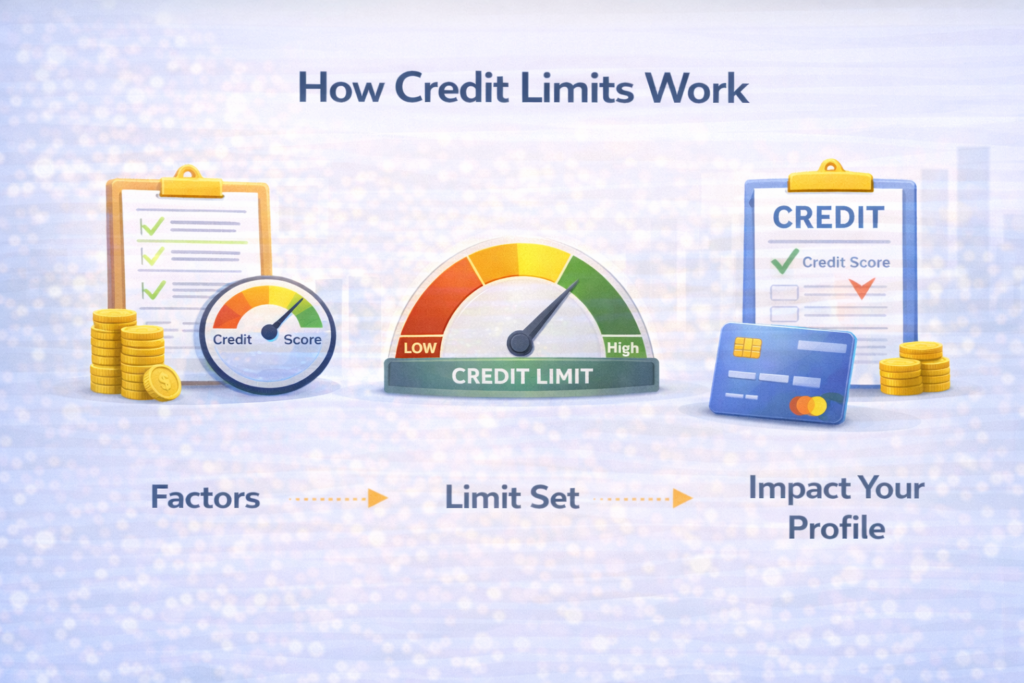
Lenders do not choose your credit limit randomly. They use several factors to estimate how much risk you represent.
Your credit score is one of the most important elements. A higher credit score suggests you have a history of responsible borrowing, which may lead to a higher credit limit.
Your income is another consideration. Lenders want to know whether you have enough income to handle potential debt payments. Your overall financial profile, including existing debts and length of credit history, also plays a role.
For people with limited credit history, limits may start low and increase over time as positive behavior is demonstrated.
Available Credit vs Used Credit
Your credit limit determines how much credit is available to you, but what matters just as much is how much of that credit you are actually using.
The amount you use compared to your limit is called credit utilization. For example, if your limit is $1,000 and your balance is $200, you are using 20% of your available credit.
Lenders and scoring models look closely at this ratio. Lower utilization is generally seen as a sign of responsible credit management.
Why Your Credit Limit Matters for Your Credit Score
Your credit limit directly affects your credit utilization, which is a key factor in your credit score. Using a large portion of your limit can lower your score because it may signal that you are financially stretched.
For instance, maxing out a credit card can make lenders think you rely heavily on borrowed money. Even if you make payments on time, high balances can still affect your credit profile.
Keeping your usage lower shows that you can manage credit without pushing your limits.
What Happens If You Reach Your Credit Limit?
If you reach your credit limit, new transactions may be declined. Some card issuers may allow you to go slightly over the limit, but this can result in fees and additional interest.
Being at or near your limit can also increase your credit utilization, which may negatively affect your credit score. It can also make it harder to handle unexpected expenses since you have no available credit left.
Regularly staying close to your limit may also signal financial stress to lenders.
Can Your Credit Limit Increase?
Yes, your credit limit can increase over time. Lenders may automatically review your account and offer an increase if you consistently pay on time and manage your account responsibly.
You can also request a credit limit increase. The lender may review your credit history and income before approving the request. Sometimes this involves a hard credit inquiry, which can have a small temporary effect on your score.
A higher credit limit can help lower your utilization ratio, provided your spending does not increase at the same rate.
Should You Use Your Full Credit Limit?
Just because you have a high limit does not mean you should use all of it. Using most or all of your available credit can increase financial risk and make it harder to pay off balances.
Experts often suggest keeping your credit utilization below 30% of your total limit. Lower than that can be even better for your credit score. Responsible use of credit means borrowing only what you can comfortably repay.
Credit Limits and Financial Discipline
Your credit limit can be a useful financial tool when used wisely. It provides flexibility and can help in emergencies. However, it also requires discipline.
Seeing a high limit may create the temptation to spend more than planned. Treating your credit limit as a safety net rather than a target can help maintain control over your finances.
Budgeting and tracking expenses are important to avoid carrying balances that grow over time due to interest.
Final Thoughts
Your credit limit is a key part of your credit profile. It affects your spending power, your credit score, and how lenders see you.
Using your limit wisely — not maxing it out and paying on time — is one of the simplest ways to build strong credit over time.