
Introduction
Starting to build credit from scratch can feel overwhelming, especially if you have never had a credit card or loan before. Without a credit history, lenders have no record to evaluate your reliability, which can make it harder to qualify for financial products like credit cards, car loans, or even apartment rentals.
The good news is that building credit is possible with the right steps and consistent habits. It does not happen overnight, but by understanding how the system works and making responsible financial decisions, you can gradually create a strong credit profile that opens doors to better financial opportunities.
What It Means to Have No Credit
Having no credit does not mean you have bad credit. It simply means there is not enough information in your credit file for lenders to generate a credit score. From a lender’s perspective, this can still feel risky because they cannot predict how you might handle borrowed money.
Building credit from scratch means creating a history that shows you can borrow and repay money responsibly. This history is built over time through reported financial activity.
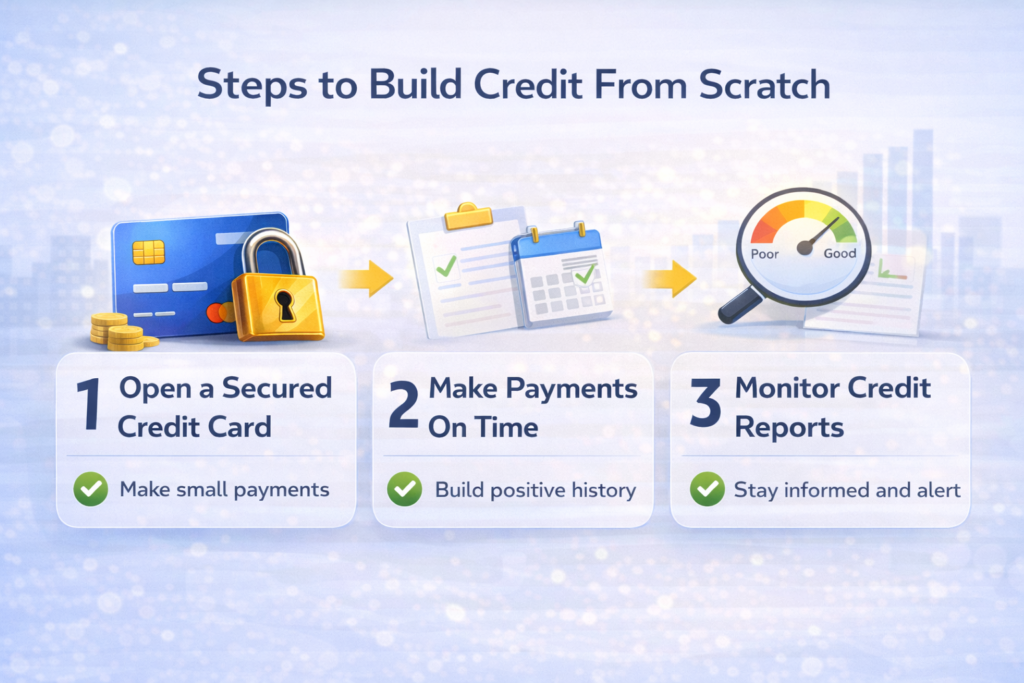
Step One: Open a Credit Account
To build credit, you need at least one account that reports to the major credit bureaus. Without reported activity, there is no data to create a credit score.
Secured Credit Cards
A secured credit card is often one of the easiest ways to begin. You provide a refundable security deposit, which usually becomes your credit limit. Even though you give a deposit, you are still borrowing money when you use the card.
Using a secured card for small purchases and paying the balance on time each month shows lenders that you can manage credit responsibly. Over time, this can help you qualify for regular unsecured credit cards.
Student or Starter Cards
Some lenders offer credit cards designed for beginners or students. These may not require a deposit but often have lower limits. Approval may depend on income and other basic financial factors.
Step Two: Make On-Time Payments Every Month
Payment history is one of the most important parts of your credit profile. Making payments on time consistently is the foundation of good credit.
Even one missed payment can hurt your progress. Setting up automatic payments or calendar reminders can help ensure you never miss a due date. Paying at least the minimum on time protects your record, while paying the full balance helps you avoid interest charges.
Step Three: Keep Your Balances Low
How much of your available credit you use also matters. This is known as credit utilization.
If your credit limit is $500 and you carry a $450 balance, you are using most of your credit. This may signal financial stress. Using a smaller portion of your limit shows better control. Many experts suggest keeping usage below 30% of your available credit.
Paying down balances before the statement closes can help maintain a lower utilization rate.
Step Four: Consider Becoming an Authorized User
If you have a trusted family member with good credit habits, becoming an authorized user on their credit card can help you build history. Their positive payment record may be added to your credit file, depending on the card issuer.
This can give you a head start, but it requires trust. If the primary user misses payments or carries high balances, it could also affect you.
Step Five: Use Credit Regularly but Carefully
Having an account is not enough; it needs to be used. Making small purchases and paying them off consistently shows active and responsible use.
However, using credit does not mean spending beyond your means. The goal is to demonstrate reliability, not to take on unnecessary debt.
Step Six: Monitor Your Credit Reports
Checking your credit reports helps you see what lenders see. It allows you to track your progress and catch errors or suspicious activity early.
Mistakes on credit reports do happen, and correcting them can prevent unnecessary damage to your score. Monitoring also helps you stay aware of how your financial habits are shaping your credit profile.
How Long Does It Take to Build Credit?
Building credit is a gradual process. It usually takes several months of activity before a credit score can be generated. Developing a strong score may take years of consistent positive behavior.
Patience is important. Quick fixes are rare, and long-term habits matter more than short-term actions.
Common Mistakes to Avoid
Opening many accounts at once can make you look risky. Missing payments or maxing out credit cards can also slow your progress. Some people believe carrying a balance helps build credit, but this is not necessary. Paying on time is what truly matters.
Avoid applying for credit too often and focus on managing the accounts you already have.
Why Building Credit Matters
A strong credit history can lead to lower interest rates, better loan terms, and more financial flexibility. It can affect housing applications, insurance rates, and even some job screenings.
Starting early and building good habits gives you more control over your financial future.
Final Thoughts
Building credit from scratch is a long-term process, but with the right steps — like opening a credit account, paying on time, and keeping balances low — you can establish a strong credit history that opens financial opportunities later in life.
Remember, credit scores impact loans, housing applications, and many financial decisions, so starting with good habits today can benefit you tomorrow.
If you’re interested on learning more, check these links.
➡ Experian – How to build credit with and without credit cards
https://www.experian.com/blogs/ask-experian/credit-education/improving-credit/building-credit/
➡ USA.gov – How your credit score is calculated and how to improve it
https://www.usa.gov/credit-score
➡ AnnualCreditReport.com (official free credit reports)
https://en.wikipedia.org/wiki/AnnualCreditReport.com
Pingback: What Happens If You Miss a Credit Card Payment?