
Introduction
Higher education is often viewed as a smart investment in one’s future earning potential and career prospects. Earning a college degree or obtaining specialized training can open doors to higher income, greater job security, and long-term professional development. However, the rising costs of education have become a significant concern over the years. Tuition, housing, textbooks, supplies, transportation, and everyday living expenses can create a financial strain that many families struggle to manage upfront.
This is where student loans come into play. They provide a way for borrowers to finance their education costs and pay them back gradually over time. While student loans can make education more accessible, they also come with long-term financial obligations that can impact borrowers for years, or even decades, after they graduate.
By understanding how student loans function—including interest rates, repayment plans, and potential risks—students and families can make informed borrowing choices and avoid financial stress down the line.
What Is a Student Loan?
A student loan is a specific type of installment loan designed to cover expenses related to education. These loans can help pay for:
- Tuition and school fees
- Housing and meal plans
- Books and academic supplies
- Technology and equipment
- Transportation
- Living expenses
Unlike many other types of loans, student loans often allow borrowers to postpone repayment until after they finish their studies. This feature makes education more accessible, but it also means that interest can accumulate before repayment starts.
Types of Student Loans
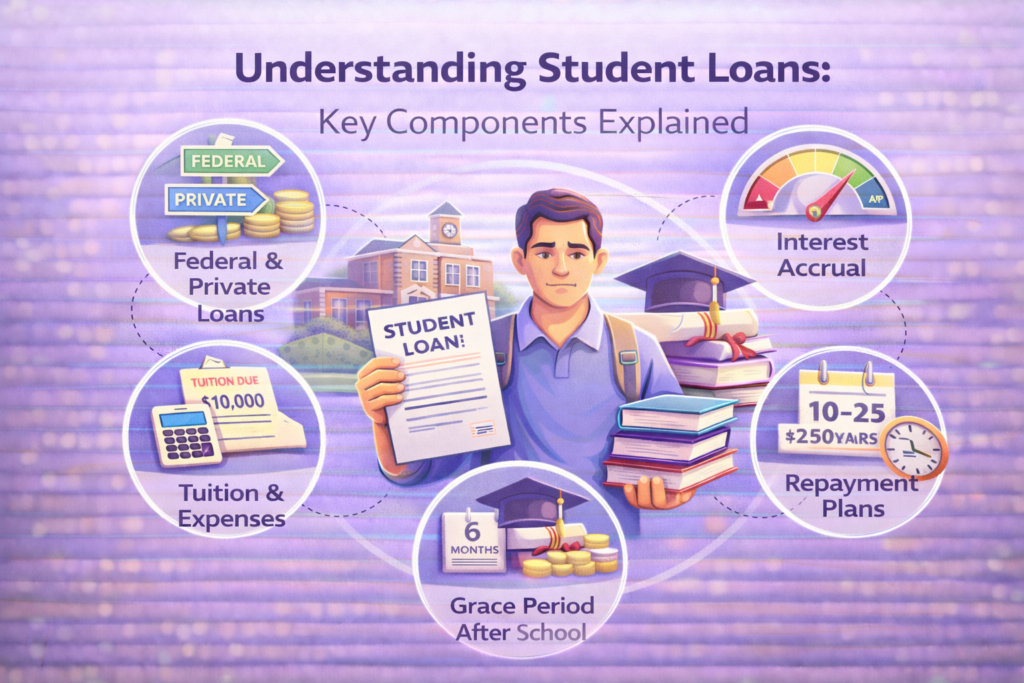
Student loans generally fall into two main categories: check this article from the Federal Student Aid here.
Federal Student Loans
Federal loans are funded or backed by the government. They typically offer:
- Fixed interest rates
- Flexible repayment options
- Deferment and forbearance possibilities
- Income-driven repayment plans
- Potential for loan forgiveness
These loans are usually more favorable for borrowers due to the protections they include.
Private Student Loans
Private loans are offered by banks, credit unions, or private lenders. They may come with:
- Fixed or variable interest rates
- Approval based on creditworthiness
- Fewer repayment protections
- Limited hardship options
Private loans can fill funding gaps but may carry higher financial risk.
Borrowing Limits and Responsible Borrowing
When it comes to student loans, there are borrowing limits that depend on a few key factors:
- Academic year
- Degree type
- Dependency status
It’s important to remember that borrowing more than you actually need can lead to higher total debt and larger monthly payments down the line. Being a responsible borrower means knowing exactly how much you’ll need to pay back after you graduate.
How Interest Works
Interest is essentially the cost of borrowing money. Depending on the type of loan, student loans might start accruing interest even while you’re still in school.
If any unpaid interest gets added to your loan balance (a process called capitalization), the total amount you owe can grow. This means you could end up paying back a lot more than what you initially borrowed.
Grace Period After Graduation
Most student loans come with a grace period, usually around six months after you graduate, before you have to start making payments. This gives you a little breathing room to find a job and get your finances in order.
Repayment Terms and Loan Duration
Repayment plans can vary quite a bit:
- Standard plans usually last about 10 years
- Extended plans can stretch out to 20 or even 25 years
While longer repayment terms can lower your monthly payments, they also mean you’ll pay more in interest over time. Check this article from Consumer Financial Protection Bureau here.
Monthly Payment Structure
Your monthly payments will depend on:
- The total loan balance
- The interest rate
- The repayment plan you choose
If you opt for an income-driven repayment plan, your payments will adjust based on your income and family size.
What Happens If Payments Are Missed
When you miss student loan payments, you might face some serious consequences, including:
- Late fees that can add up quickly
- Negative marks on your credit report
- Debt collectors knocking on your door
- In some cases, wage garnishment
Defaulting on your student loans can really put a dent in your long-term financial health.
Deferment and Forbearance Options
If you’re struggling, you can ask for:
- Deferment—a temporary break where, in some cases, interest doesn’t grow
- Forbearance—a temporary pause, but keep in mind that interest might still pile up
These options can be lifesavers during tough times, but they could also lead to a bigger debt down the line.
Loan Forgiveness Programs
Some borrowers might be eligible for loan forgiveness if they meet certain criteria, such as:
- Working in public service jobs
- Teaching at qualifying schools
- Staying in income-driven repayment plans for a long time
Just remember, these forgiveness programs come with strict eligibility requirements.
Refinancing Student Loans
Refinancing means swapping out your current loans for a new one, often at a lower interest rate. But be cautious—if you refinance federal loans into private ones, you could lose some important protections.
Long-Term Financial Impact
Student loans can have a ripple effect on your life, influencing:
- Your credit score
- Your monthly budget
- Your chances of getting a mortgage or car loan
- Your ability to save and invest
Carrying large loan balances can really slow down your progress toward major life goals.
The Emotional Toll of Student Debt
Dealing with student debt can really weigh you down, leading to stress and anxiety, especially when the thought of repayment feels like a mountain to climb. Staying informed and taking proactive steps can help ease that uncertainty and boost your financial confidence.
Tips for Tackling Student Loan Debt
✔ Only borrow what you truly need
✔ Keep an eye on your loan balances
✔ Get a grip on the interest terms
✔ Opt for repayment plans that fit your budget
✔ Don’t hesitate to seek help if you’re feeling overwhelmed
Education as a Smart Investment
Sure, student loans come with their risks, but investing in education can significantly enhance your earning potential eventually. The trick is to match your borrowing with realistic career goals.
Main Takeaway
Student loans can open doors to education, but they also come with long-term financial responsibilities. By understanding interest rates, repayment options, and potential risks, borrowers can avoid taking on too much debt and manage their finances wisely.
Final Thoughts
Student loans are powerful tools that can help you achieve your educational and career aspirations. However, it’s crucial to approach them with careful planning and a solid understanding of your finances. By grasping how student loans function, borrowers can make smart choices that promote long-term financial well-being rather than financial stress.
Pingback: How to Choose the Right Loan: Understanding Costs, Risks, and Repayment