
Introduction
For many folks, buying a home is the biggest financial decision they’ll ever make. Given the high costs of homes, most buyers can’t afford to pay the full price upfront. That’s where mortgages come in — these long-term loans are specifically designed for purchasing real estate.
While mortgages make homeownership a reality, they also come with decades of financial commitment. Unlike short-term loans, mortgages bundle together interest, taxes, insurance, and legal obligations into one comprehensive agreement. Grasping how home financing works is crucial for borrowers to sidestep costly errors and get ready for the long-term responsibilities that come with it.
A lot of first-time buyers tend to focus solely on whether they can get approved for a loan. But getting that approval is just the beginning. The real test lies in managing the mortgage over the years. This guide will break down what a mortgage is, how payments are structured, and the financial factors you need to understand before making that commitment.
What Is a Mortgage?
A mortgage is essentially a loan taken out to buy property. The lender provides the funds for the home, and the borrower pays back the loan over time, plus interest.
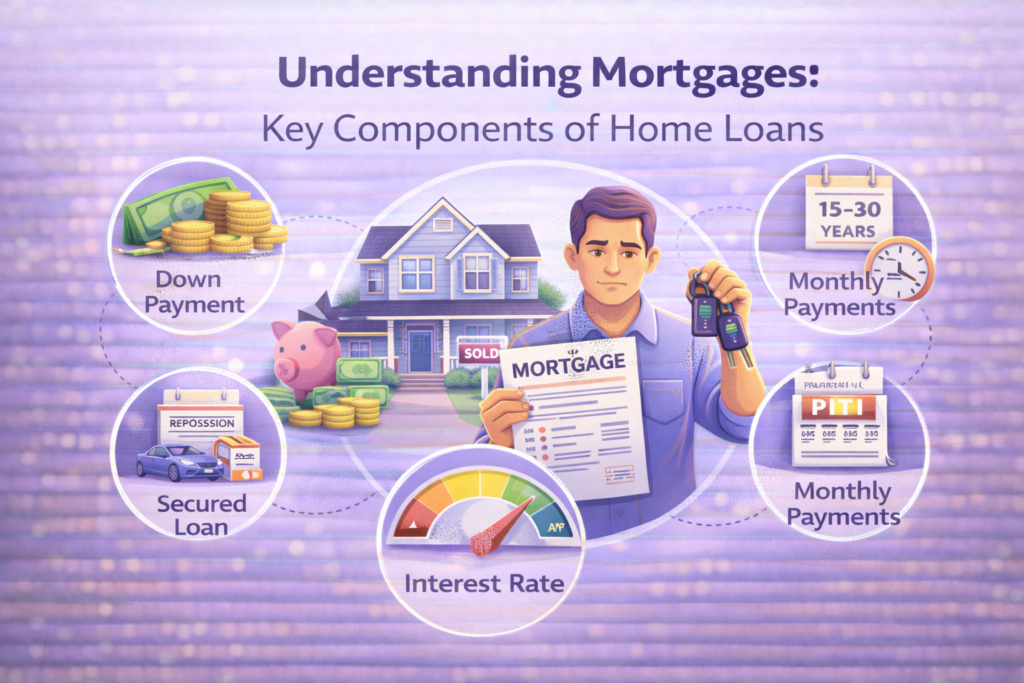
Mortgages are secured loans, which means the property itself serves as collateral. If payments are missed, the lender has the legal right to reclaim the property. Because of this security, mortgage interest rates are typically lower than those on unsecured loans, like credit cards.
Mortgages stand out from most loans because they involve:
- Very large loan amounts
- Long repayment periods (usually 15 to 30 years)
- The property as security
The Structure of a Mortgage Payment (PITI)
Mortgage payments are a bit more intricate than standard loans. They generally consist of four components, often referred to as PITI:
- Principal: This is the part of your payment that goes toward reducing the loan balance.
- Interest: This represents the cost of borrowing. In the initial years, a larger portion of your payment is allocated to interest rather than principal.
- Taxes: Property taxes are often collected monthly through an escrow account and paid on your behalf.
- Insurance: Homeowners insurance protects the property. Some borrowers also pay mortgage insurance.
The Down Payment
When you’re buying a home, the down payment is the initial amount you pay upfront.
A larger down payment can:
- Lower the overall loan amount
- Reduce your monthly payments
- Decrease the total interest you’ll pay
- Potentially eliminate the need for mortgage insurance
On the flip side, a smaller down payment can increase financial risk since the borrower ends up owing more compared to the home’s value.
Mortgage Loan Terms
Mortgage terms usually come in a few standard lengths:
- 15 years
- 20 years
- 30 years
Choosing a longer term can lower your monthly payments, but it also means you’ll pay more in interest over time. Conversely, a shorter term will raise your monthly payments but cut down on the total cost of borrowing. This trade-off highlights how longer loan durations can lead to a higher overall cost.
Fixed vs Adjustable Mortgage Rates
Mortgages can have different interest rate structures:
- Fixed-Rate Mortgage: The interest rate stays the same throughout the life of the loan, making your payments predictable.
- Adjustable-Rate Mortgage (ARM): The interest rate can change after an initial period, which means your payments might go up if market rates rise.
Borrowers who prefer stability often opt for fixed rates, while adjustable rates might start lower but come with some uncertainty down the line.
How Mortgage Interest Works Over Time
Interest is calculated based on the remaining balance of the loan. Since the balance is highest at the start, your early payments are mostly going toward interest. As time goes on, a larger portion of your payment will go toward the principal. This gradual change is known as amortization.
The Mortgage Approval Process
Before approving a mortgage, lenders take a close look at borrowers. They consider:
- Income and job stability
- Credit history
- Existing debts
- Debt-to-income ratio
- Savings and reserves
These factors help lenders determine if the borrower can handle long-term payments.
Total Cost of Homeownership
When it comes to owning a home, the purchase price is just the tip of the iceberg. There are long-term costs to consider, such as:
- Interest that accumulates over the years
- Property taxes
- Insurance premiums
- Ongoing maintenance
- Repairs
Even a slight difference in interest rates can lead to thousands of dollars in costs over time.
Escrow Accounts
Many mortgages come with an escrow account, where a portion of each payment is set aside for taxes and insurance. This ensures that these important bills are paid on time, giving you peace of mind.
Mortgage Insurance (PMI)
If your down payment is on the smaller side, lenders might require you to get private mortgage insurance (PMI). Keep in mind that PMI protects the lender, not you, and it can add to your monthly expenses.
Refinancing
Refinancing is the process of replacing your current mortgage with a new one. Homeowners often choose to refinance to:
- Lower their interest rate
- Shorten the loan term
- Decrease their monthly payments
However, it’s important to remember that refinancing comes with its own set of fees, so it’s wise to weigh your options carefully.
The Risk of Missing Mortgage Payments
When it comes to mortgages, they’re tied to your property, which means that failing to make payments can lead to foreclosure—that’s when the lender legally takes back your home.
Here’s what you could face if you miss payments:
- Damage to your credit score
- Losing your home
- Legal fees piling up
Long-Term Financial Commitment
A mortgage isn’t just a short-term deal; it can impact your finances for many years. If your income changes, you lose your job, or unexpected expenses pop up, keeping up with payments can become tough. That’s why having an emergency fund and sticking to a budget is so important.
Benefits of Responsible Mortgage Borrowing
If you handle your mortgage wisely, it can:
- Help you build equity in your home
- Provide stability in your living situation
- Create a solid financial foundation for the future
Owning a home can really help you achieve both your lifestyle and financial aspirations.
Key Takeaway
Remember, a mortgage is more than just a loan—it’s a long-term financial obligation linked to your home. By understanding your payments, interest rates, and the risks involved, you can make smarter choices and steer clear of financial stress.
Final Thoughts
Mortgages are what make homeownership a reality, but they come with a long-term financial commitment. By grasping how home financing works, borrowers can navigate the process with confidence, avoid unexpected hurdles, and make choices that lead to lasting financial stability.