
Introduction
When you borrow money, there’s a straightforward expectation: you’ll pay it back as agreed. But let’s be real—life can throw some curveballs. Job losses, medical emergencies, economic downturns, or surprise expenses can make it tough to keep up with repayments. If missed payments drag on for too long, that’s when a loan can fall into what we call default.
Loan default isn’t just about being late on payments. It signifies a serious breakdown in the loan agreement and can lead to long-lasting financial repercussions that impact your credit score, income, and ability to borrow in the future.
Grasping what loan default really means, how it occurs, and what options are available to borrowers before reaching that point can be crucial in preventing a temporary setback from spiraling into a long-term financial mess.
What Is Loan Default?
A loan is deemed to be in default when the borrower fails to adhere to the repayment terms for an extended period, going beyond the usual delinquency.
While the specifics can vary a bit depending on the loan type, many installment loans are considered in default after 90 days or more of missed payments. At this point, lenders stop viewing the situation as a temporary hiccup and start seeing it as a significant risk.
Consumer financial protection agencies clarify that default marks a serious shift in status that can impact your credit and legal standing. The Consumer Financial Protection Bureau offers guidance on borrower rights and lender practices in cases of serious delinquency.
Information link here.
How Loans Move From Late to Default
Default isn’t something that happens in an instant; it’s a gradual process.
Stage 1: Delinquency
Once a payment is late, it’s considered delinquent. Fees might kick in, but the loan is still active.
Stage 2: Serious Delinquency
After 30 to 60 days, lenders may ramp up their collection efforts. Credit reporting typically starts at 30 days past due.
Stage 3: Default
If non-payment continues for an extended period (usually 90 days or more), the lender may officially declare the loan in default. At this stage, the consequences can become much more serious.
What Happens When a Loan Goes Into Default?
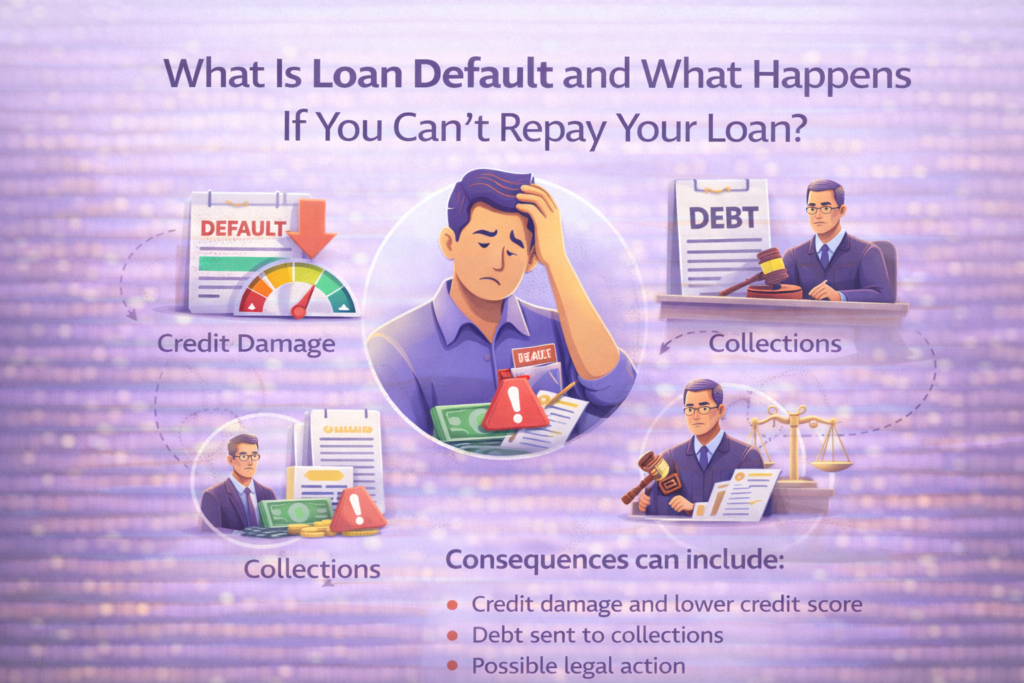
When a loan goes into default, it really shifts the dynamic between the borrower and the lender. You might face several consequences all at once.
1. The Full Balance May Become Due
A lot of loan agreements come with an acceleration clause. This means that once you default, the lender can demand the entire remaining balance instead of just the overdue payments.
This can make it even tougher to catch up since you now have to deal with the full amount owed.
2. Credit Damage Becomes Severe
Default can seriously hurt your credit profile.
Here’s what you might expect:
- A significant drop in your credit score
- Negative marks that could stick around for years
- Struggles to qualify for new loans, credit cards, or even housing
Since payment history is a major factor in credit scoring, default sends a red flag to future lenders about your risk level.
3. Debt May Be Sent to Collections
Lenders might hand off or sell your defaulted debt to a collection agency. These agencies work to recover the money for the lender.
Collection accounts can:
- Show up on your credit report
- Further decrease your credit score
- Add stress with constant contact attempts
The Federal Trade Commission offers consumer protection resources that explain how debt collection operates and what practices are permitted.
4. Legal Action Is Possible
If collection efforts don’t pan out, lenders might take legal action.
Possible outcomes could include:
- Lawsuits
- Wage garnishment (where part of your paycheck is taken)
- Bank account levies
Not every defaulted loan leads to legal trouble, but the chances increase if communication breaks down and payments are left unpaid.
5. Additional Costs and Fees
Default can also lead to extra charges, such as:
- Collection costs
- Legal fees
- Additional interest
These added costs can pile up, making it even harder to recover from the situation.
Understanding the Long-Term Effects of Default
Defaulting on a loan isn’t just a short-term issue; it can have lasting consequences for your financial future.
If you find yourself in default, you might encounter:
- Higher interest rates on future loans
- Trouble renting a place to live
- Hurdles when trying to secure utilities or services that require credit checks
- Limited financial flexibility
That’s why taking action early is so important.
What to Do Before You Hit Default
Default is often something you can avoid. If you’re having trouble making your payments, acting quickly can help you steer clear of default before it becomes a bigger problem.
1. Reach Out to Your Lender Right Away
Lenders are usually more willing to work with you before you default.
You might be able to ask for:
- Temporary reductions in your payments
- Extensions on your payment deadlines
- Access to hardship programs
Many lenders would rather help you restructure your payments than send your account to collections.
2. Inquire About Loan Modification or Forbearance
Some lenders offer the option to temporarily change the terms of your loan.
This could mean:
- Pausing your payments for a little while
- Extending the length of your loan
- Adjusting your payment schedule
These options can give you some much-needed breathing room during tough financial times.
3. Know Your Rights
As a borrower, you have legal protections. There are government resources that explain how lenders should handle collections and communicate with you.
The Consumer Financial Protection Bureau provides helpful information on dealing with debt collectors and steering clear of scams.
If Your Loan Is Already in Default
Even if you’ve already defaulted, there’s still a chance to recover.
Here are some steps to consider:
✔ Stay in touch with your lender or collection agency
✔ Ask about settlement options or payment plans
✔ Don’t ignore any legal notices
✔ Keep an eye on your credit report
Some borrowers are able to negotiate repayment plans that help prevent things from getting worse.
The Emotional and Financial Stress of Default
Dealing with default can feel like an emotional rollercoaster. The stress often leads people to shut down and avoid communication, which only makes things worse.
On the bright side, lenders and agencies typically have established processes in place. Tackling the issue head-on usually opens the door to more manageable solutions.
Preventing Future Default
To lower the risk of default, consider these financial habits:
- Build an emergency fund
- Steer clear of borrowing more than you can handle
- Keep track of payment due dates
- Reach out for help early if you start feeling financial pressure
Remember, it’s always easier to prevent a problem than to fix one.
Key Takeaway
Loan default isn’t just about missing a payment — it signifies a significant shift that can lead to credit damage, collections, legal troubles, and long-lasting financial repercussions. Often, default stems from a series of missed chances to address issues before they escalate.
By understanding the process, borrowers can take action before things spiral out of control.
Final Thoughts
Loan default occurs when payments stop for an extended period, resulting in serious financial and legal fallout. The best defense is to communicate early and tackle problems proactively. Lenders usually have options available before default happens, but those choices dwindle once you reach that point.
Being informed, communicating openly, and acting quickly can transform a financial crisis into a manageable hurdle instead of a long-term setback.