
Introduction
Applying for a loan can be a bit daunting, especially if it’s your first time. A lot of folks think it’s just about filling out a form and waiting for the cash to magically show up in their bank account. But the truth is, lenders have a detailed evaluation process in place to assess risk before they hand out any money.
Getting a grip on how the loan application process works can help you dodge any unexpected bumps, boost your chances of getting approved, and make smarter financial choices. Whether you’re looking for a personal loan, an auto loan, or any other kind of installment loan, the steps lenders take are usually pretty similar.
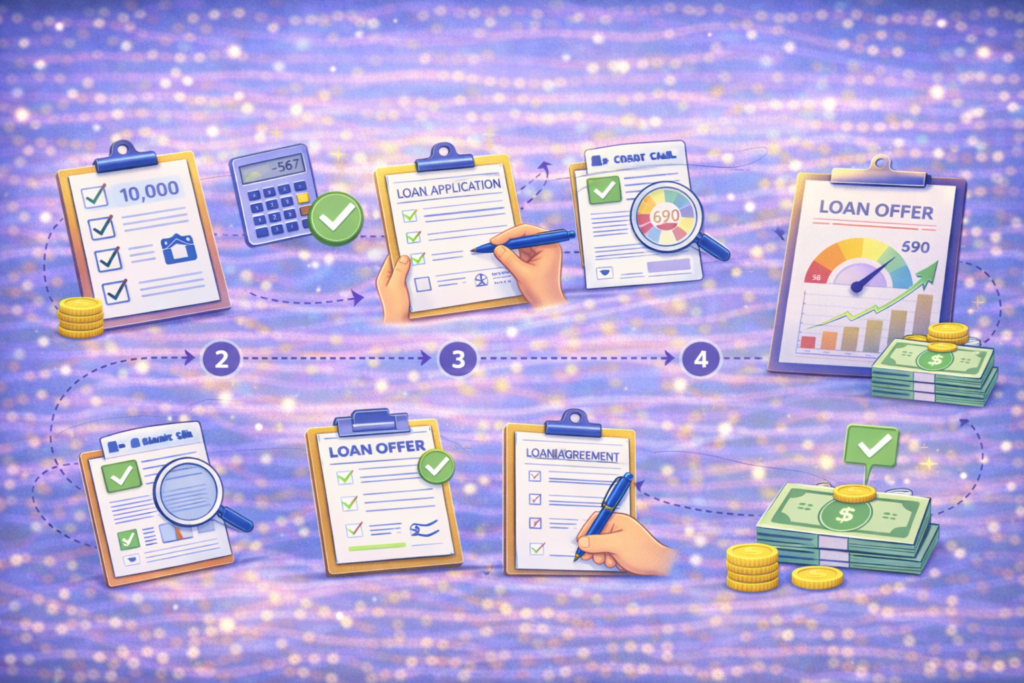
This guide will walk you through the process in straightforward stages, so you’ll know exactly what to expect from the moment you apply until the funds hit your account.
Step 1: Figuring Out How Much You Need to Borrow
Before you even reach out to a lender, the journey starts with you.
Lenders expect borrowers to have a clear idea of:
- How much they want to borrow
- What the loan is for
- A ballpark figure of what monthly payment they can handle
Borrowing more than you need can weigh you down financially, while borrowing too little might not fix your issue. Smart borrowing begins with figuring out a realistic payment that fits your budget without putting you in a tight spot.
Step 2: Prequalification (Initial Estimate)
Many lenders provide a prequalification step. This is an early look that gives you an idea of:
- Potential loan amount
- Estimated interest rate
- Projected monthly payment
Prequalification typically involves a soft credit check, which won’t impact your credit score. It helps both you and the lender determine if it makes sense to move forward.
At this point, the figures are just estimates based on limited information.
Step 3: Submitting a Formal Loan Application
Once you’ve made the decision to proceed, it’s time to fill out the official application. This is where lenders gather all the nitty-gritty details about your finances.
You’ll usually need to provide:
- Your full legal name and address
- Your Social Security number (for identity verification and credit checks)
- Information about your employment
- Your monthly income
- Any existing debts
- Your housing expenses
Getting this information right is crucial. If there are inconsistencies, it could slow down the approval process or even lead to a rejection.
Step 4: Hard Credit Inquiry
Once you’ve submitted your application, the lender will conduct a hard credit inquiry. This gives them a chance to look over your complete credit report and score.
Keep in mind that a hard inquiry might cause a slight, temporary dip in your credit score. But don’t worry; this is a standard part of the borrowing process and usually doesn’t have a significant effect.
The lender will take a close look at:
- Your payment history
- Any outstanding debts
- Your credit utilization
- The length of your credit history
- Recent credit activity
This step helps the lender gauge how likely you are to repay the loan.
Step 5: Income and Employment Verification
Your credit history is just one piece of the puzzle. Lenders also need to verify that you can actually repay the loan.
They might ask for:
- Recent pay stubs
- Tax returns
- Bank statements
- Contact information for your employer
Some lenders will check your employment directly, while others might use automated systems to confirm your income. Having a stable income makes you a less risky borrower in their eyes.
Step 6: Debt-to-Income (DTI) Analysis
Lenders will calculate your debt-to-income ratio (DTI) to see how much of your income is already tied up in debt payments.
DTI is calculated by comparing:
Total monthly debt payments ÷ Gross monthly income
A lower DTI means you have some wiggle room in your budget for another loan. On the flip side, a high DTI could indicate financial strain, which might lead to a denial or a higher interest rate.
Step 7: Underwriting Review
This is where the big decisions are made. Underwriting is the stage where the lender reviews all the information they’ve gathered:
- Your credit profile
- The stability of your income
- Your employment
Underwriters assess risk and decide whether to approve, deny, or request additional documents.
Step 8: Loan Approval and Offer
Once you’re approved, the lender will send you a formal loan offer. This will detail:
- The loan amount
- The interest rate
- Your monthly payment
- The loan term (how long it lasts)
- Any fees that might apply
Take this opportunity to go through everything carefully. Just because you’re approved doesn’t mean you have to accept the loan.
Step 9: Signing the Loan Agreement
If you’re happy with the terms, it’s time to sign the loan contract. This document is legally binding and lays out your responsibilities.
By signing, you’re agreeing to:
- Repay the loan on time
- Stick to the terms of the agreement
- Pay any interest and applicable fees
Always make sure to read everything before you sign.
Step 10: Loan Disbursement
After you sign, the lender will release the funds. Depending on the lender, the money might be:
- Deposited directly into your bank account
- Sent to a third party, like a car dealership
And that wraps up the process!
What This Means for You as a Borrower
Understanding these steps can help you:
- Get your documents ready ahead of time
- Avoid mistakes in your application
- Compare offers with confidence
- Minimize delays in approval
Remember, loans aren’t instant approvals — they’re structured financial agreements.
Final Thoughts
The loan application process is all about finding a balance between opportunity and risk. Lenders want to see that you can repay, while you need clear terms that work for your budget.
By grasping each step — from prequalification to disbursement — you’ll be a more informed borrower and lessen the chances of any unexpected costs.
A loan should serve as a financial tool, not a financial trap. Understanding how the process works is your first step toward using it wisely.
Pingback: What Lenders Consider Before Approving a Loan -