
Introduction
Buying a car is one of the biggest financial choices most people make, second only to buying a home. Since cars can be quite pricey, many buyers turn to auto loans to help spread the cost over several years instead of paying the full amount all at once.
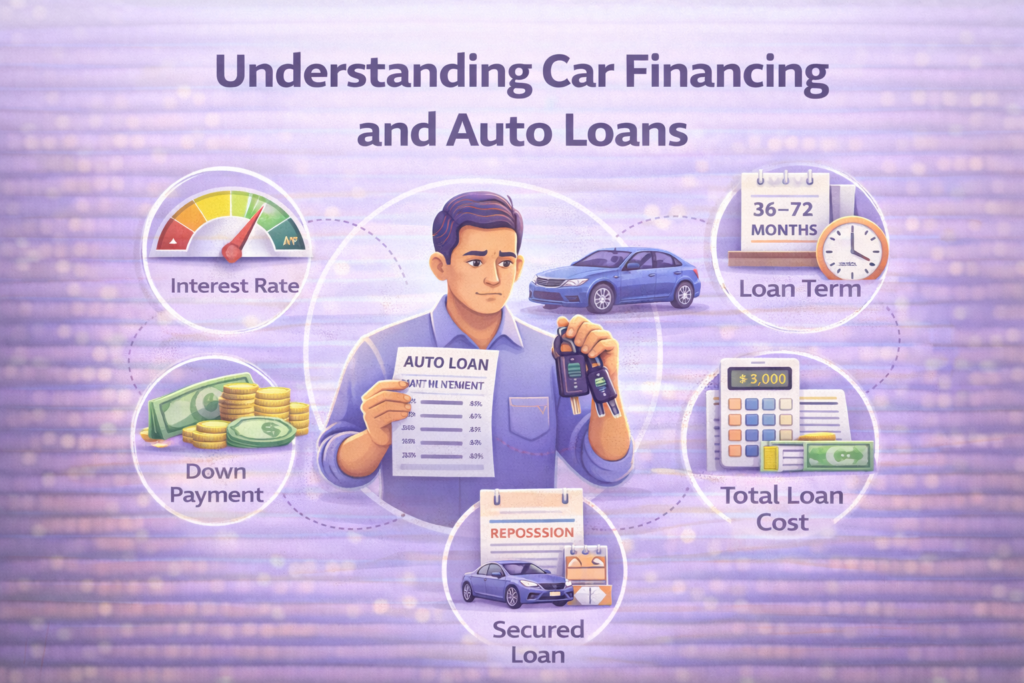
Car financing opens the door to vehicle ownership, but it’s still a structured loan that comes with interest, repayment terms, and some financial risks. By understanding how auto loans work, you can avoid overpaying, select manageable payments, and steer clear of long-term financial stress.
This guide will walk you through how car loans operate, what factors influence your payments, and the risks you should be aware of before you sign any financing agreement.
What Is an Auto Loan?
An auto loan is a specific type of installment loan designed for purchasing a vehicle. You borrow a certain amount from a lender and pay it back through fixed monthly payments over a set period.
Unlike credit cards, auto loans come with:
- A fixed loan amount
- A set repayment schedule
- A defined payoff date
This structured approach makes it easier to plan your payments, but it also means you’re locked in for several years.
The Importance of the Down Payment
A down payment is the cash you put down upfront toward the car’s price.
A larger down payment:
- Reduces the amount you need to borrow
- Lowers your monthly payments
- Cuts down on the total interest paid
- Decreases the lender’s risk
On the flip side, a smaller down payment increases the amount financed, which raises both your monthly payments and the overall cost.
Loan Term: How Long You’ll Be Paying
Auto loan terms typically range from:
- 36 months
- 48 months
- 60 months
- 72 months or more
Longer terms can lower your monthly payments but will increase the total interest you pay. This is directly related to how the duration of the loan impacts the overall borrowing cost, which is explained in
👉 How Loan Repayment Terms Affect the Total Cost of Your Loan.
Understanding Interest Rates (APR)
The interest rate, commonly known as APR, is what determines how much you’ll end up paying to borrow money.
Your specific rate is influenced by several factors:
- Your credit profile
- The stability of your income
- The length of the loan term
- Whether you’re buying a new or used car
Even a small difference of just 1–2% in your rate can lead to hundreds or even thousands of dollars in extra costs over time.
How Monthly Payments Are Determined
Your monthly payment is calculated based on:
- The amount of the loan
- The interest rate
- The duration of the loan
While a higher loan amount or a longer term can ease your monthly budget, it can also increase the total cost in the long run.
Auto Loans Are Secured Loans
Car loans are considered secured loans, which means the vehicle itself acts as collateral. If you stop making payments, the lender has the right to repossess the car.
Since the lender can reclaim the vehicle, auto loans typically come with lower interest rates compared to unsecured loans.
Total Cost vs. Car Price
Many buyers tend to focus solely on the sticker price of the car, but the total cost of the loan actually includes:
- The price of the vehicle
- Interest charges
- Any additional fees
For instance, a $20,000 car financed at a higher interest rate could end up costing you significantly more overtime.
Dealer Financing vs. Bank or Credit Union Loans
You can get auto loans from various sources, including:
- Banks
- Credit unions
- Dealership financing
While dealers often provide convenience, banks or credit unions might offer more favorable rates. Taking the time to compare your options can lead to substantial savings in the long run.
What Happens If You Miss Auto Loan Payments
When you miss a payment on an auto loan, it can lead to some serious repercussions since the loan is backed by the vehicle itself:
- Late fees
- Damage to your credit score
- The risk of having your car repossessed
To dive deeper into these risks, check out
👉 What Happens If You Miss a Loan Payment?
Keep in mind that repossession doesn’t just mean losing your car; you might still be responsible for any remaining debt.
Additional Costs of Owning a Car
Financing your vehicle is just one piece of the puzzle. As a car owner, you also need to plan for:
- Insurance
- Fuel
- Maintenance
- Registration
- Repairs
If you overlook these expenses, you could find yourself in a tight financial spot, even if your loan payment feels manageable.
How to Know What You Can Afford
Before you take the plunge into financing, think about:
✔ Your monthly income
✔ Any existing debts
✔ Emergency savings
✔ Insurance costs
A car should enhance your mobility, not add to your financial worries.
The Risk of Long Loan Terms
Opting for long-term car loans (6–7 years) can be risky because:
- You might end up owing more than the car’s actual value
- You’ll be in debt for a longer period
- The total interest you pay will increase
While shorter terms may mean higher monthly payments, they can help lighten your long-term financial load.
Smart Car Financing Strategies
✔ Aim to make the largest down payment you can
✔ Shop around and compare lenders
✔ Choose the shortest term that fits your budget
✔ Look at the total cost, not just the monthly payment
These strategies can help you avoid overpaying.
Key Takeaway
Auto loans can make owning a car a reality, but they come with long-term financial responsibilities. By understanding interest rates, loan terms, collateral risks, and the total cost, you can safeguard your financial well-being.
Final Thoughts
Financing a car isn’t just about getting approved; it’s about selecting a loan that aligns with your financial situation. A vehicle should boost your mobility, not create financial stress. By grasping how auto loans function, you can make choices that support your long-term financial health.