
Introduction
Navigating the loan approval process can be a bit nerve-wracking, especially if you’re not clear on how lenders make their choices. Many people think that getting approved hinges solely on having a “good credit score,” but in reality, lenders take a closer look at a mix of financial, behavioral, and risk-related factors before giving the green light.
Lending money is inherently risky. From the lender’s viewpoint, the key question is:
“How likely is it that this borrower will pay back the loan on time and in full?”
To figure that out, lenders examine your financial profile from various perspectives. Knowing what they focus on before approving a loan can give you a significant edge. It helps you identify areas for improvement, gather the necessary documents, and time your application just right — all of which can boost your chances of approval and potentially lead to better loan terms.
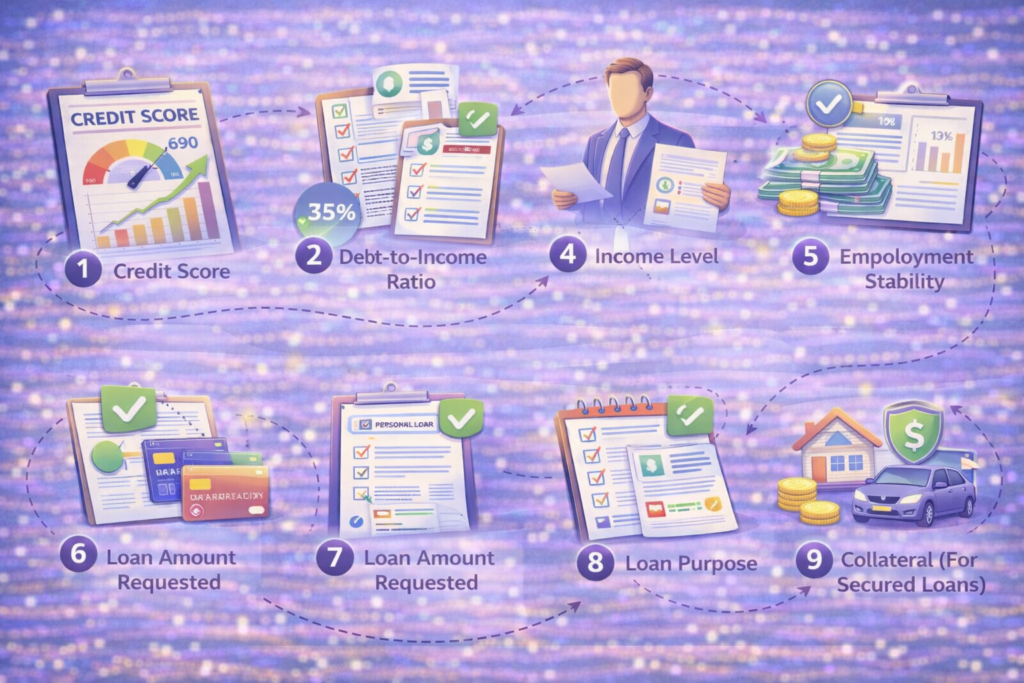
1. Your Credit Score
Your credit score is usually the first thing lenders look at because it condenses your credit behavior into a single number.
A higher score generally indicates:
- A solid payment history
- Responsible credit usage
- A lower risk of default
On the flip side, a lower score might point to past financial troubles, like missed payments or high debt levels. But remember, the score is just the starting point for a deeper dive.
Lenders use the score for a quick risk assessment, but they also dig into your full credit report to get the full picture behind that number.
2. Your Payment History
Your payment history is one of the most crucial factors lenders take into account. It showcases your actual borrowing behavior.
They look for:
- Late payments
- Missed payments
- Accounts that have gone to collections
- Charge-offs or defaults
Even if your income looks great, a history of missed payments raises a red flag. Lenders tend to favor borrowers who demonstrate a reliable track record of meeting their financial obligations on time. Past behavior is often seen as a predictor of future behavior.
3. Your Debt-to-Income Ratio (DTI)
Your debt-to-income ratio (DTI) is a snapshot of how much of your monthly income is already tied up in debt payments.
Here’s how you calculate it:
Monthly debt payments ÷ Gross monthly income
If your DTI is on the higher side, it means your budget is pretty tight, which can make it harder to manage another loan payment. On the flip side, a lower DTI suggests you have some breathing room in your finances to take on new debt responsibly.
This is a crucial part of what lenders look at during the [loan application process], where they verify your income and obligations.
4. Your Income Level
Your income is a key indicator of your ability to repay the loan. Lenders will consider:
- Monthly or annual earnings
- How consistent your income is
- Where your income comes from
Generally, a higher income can lead to larger loan approvals, but it has to be balanced with your existing debts and expenses.
Lenders want to make sure your income can comfortably cover both your current obligations and the new loan payment.
5. Employment Stability
Having a stable job helps reduce uncertainty for lenders. They’ll look at:
- How long you’ve been with your current employer
- The consistency of your career path
- The stability of your industry
If you’ve changed jobs frequently or have an irregular work history, it might raise some red flags about the reliability of your income. Self-employed individuals often need to provide extra documentation, like tax returns, to prove their earnings.
6. Existing Debt Obligations
Lenders don’t just tally up how much debt you have; they also consider the types of debt you carry.
They’ll review:
- Mortgages
- Auto loans
- Student loans
- Personal loans
Having multiple open loans can increase your financial commitments. Even if you’re up to date on all your payments, a high number of obligations can make you seem like a bigger risk.
7. Loan Amount Requested
The amount you’re asking to borrow is important. If you’re looking for a large loan compared to your income or financial history, it raises the lender’s risk.
Lenders will compare the amount you’re requesting to:
- Your income
- Your credit profile
- Your current debt
Requesting a realistic amount that aligns with your financial situation improves your approval odds.
8. Loan Purpose
When applying for a loan, some lenders will want to know how you intend to use the funds. Certain purposes might be seen as more responsible than others.
For instance:
- Debt consolidation can reflect good financial planning.
- Home improvements could increase your property’s value.
- Vague or risky uses might raise some eyebrows.
While the purpose of the loan isn’t the sole factor in approval, it can definitely shape how lenders view the risk involved.
9. Collateral (For Secured Loans)
If you’re taking out a secured loan, the asset you’re putting up as collateral plays a significant role in the decision-making process.
Lenders will assess:
- The value of the asset
- Its condition
- How easy it would be to sell
Having collateral lowers the lender’s risk since they can recoup their losses if you stop making payments. That’s why it’s crucial to understand the difference between secured and unsecured loans before you borrow.
10. Your Overall Financial Profile
No single element guarantees approval. Lenders look at the complete picture:
- Your credit behavior
- The strength of your income
- Your debt levels
- Your financial stability
- Any risk indicators
For example, a borrower with a slightly lower credit score but a solid income and minimal debt might still get approved. On the flip side, a high credit score paired with significant debt could lead to a denial.
It’s all about finding the right balance, not achieving perfection.
What This Means for You as a Borrower
You can boost your chances of approval before you even apply by:
- Paying your bills on time
- Reducing any outstanding debt
- Steering clear of new credit applications
- Checking your credit report for mistakes
- Having proof of income ready
Being prepared lets you tackle the process with a strategy instead of just hoping for the best.
Final Thoughts
Loan approval isn’t a game of chance — it’s a careful assessment of risk. Lenders examine your credit behavior, income, debt levels, and overall financial stability to determine if lending to you is a safe bet.
By understanding what they’re looking for, you can shift from being a passive applicant to an informed borrower. This knowledge empowers you to enhance your profile, apply at the right moment, and achieve better financial results.