
Introduction
If you are new to credit or trying to rebuild your financial history, you may have heard about something called a secured credit card. At first, the term can sound confusing, but the concept is actually simple and designed to help people who are starting from zero or recovering from past credit problems.
A secured credit card works much like a regular credit card, but it requires a security deposit. This deposit reduces risk for the lender and makes approval easier for people with limited or poor credit. Used correctly, a secured card can be a powerful tool for building or repairing your credit score.
How a Secured Credit Card Works
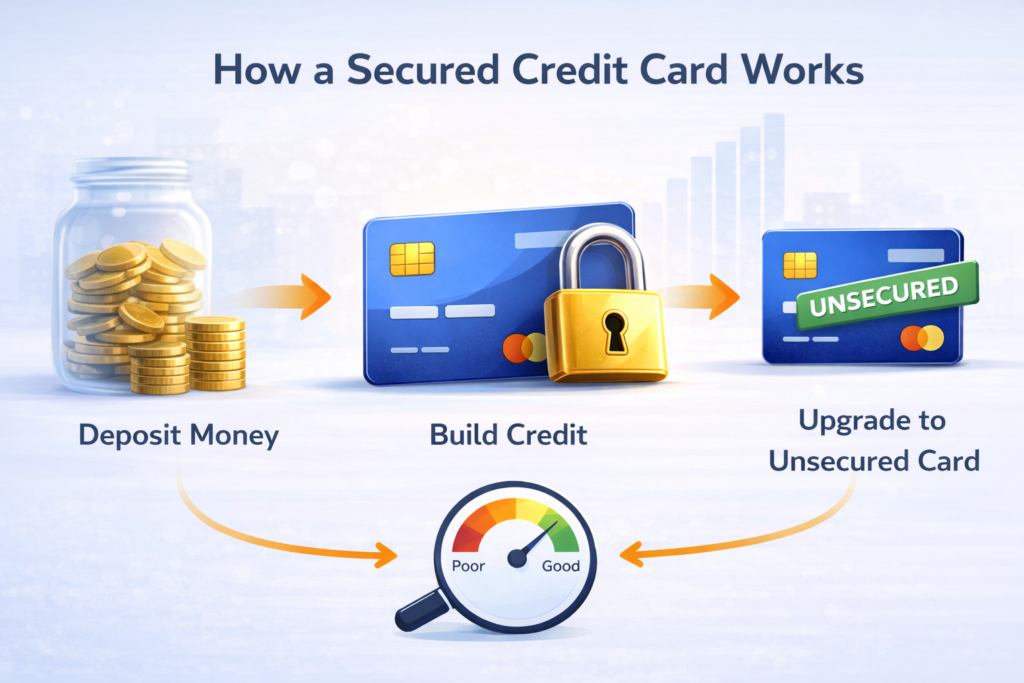
A secured credit card requires you to provide a refundable security deposit when you open the account. This deposit usually becomes your credit limit.
For example, if you deposit $300, your credit limit is often $300. You can then use the card to make purchases just like any other credit card. At the end of each billing cycle, you receive a statement and must make at least the minimum payment by the due date.
Even though you provide a deposit, you are still borrowing money when you use the card. If you carry a balance, interest may apply just like with an unsecured credit card.
Why Lenders Require a Deposit
The deposit serves as protection for the lender. Secured cards are designed for people who may be considered higher risk because they have little or damaged credit history. If the cardholder stops making payments, the lender can use the deposit to cover the unpaid balance.
This system allows banks to offer credit to people who might not otherwise qualify. At the same time, it gives consumers a chance to prove they can manage credit responsibly.
How Secured Credit Cards Help Build Credit
One of the main benefits of a secured credit card is that it can help you build a positive credit history. Most major secured card issuers report your account activity to the three main credit bureaus.
If you use the card responsibly, you can show lenders that you:
- Pay your bills on time
- Keep balances low
- Use credit regularly but carefully
Over time, these positive habits can improve your credit score and open the door to better financial opportunities.
Secured Credit Cards vs Prepaid Cards
Many people confuse secured credit cards with prepaid cards, but they are very different.
With a prepaid card, you are simply spending your own money. The activity is not reported to credit bureaus, so it does not help build credit. A secured credit card, on the other hand, involves borrowing and repayment, which creates a credit history.
This is why a secured card is useful for building credit, while a prepaid card is not.
What Happens to Your Deposit
Your deposit is not a fee. In most cases, it is refundable. If you manage your account well and eventually close it in good standing, you typically receive your deposit back.
Some lenders also review your account after a period of responsible use. If you have made on-time payments and managed the card well, you may be upgraded to an unsecured credit card. When this happens, your deposit is usually returned.
Who Should Consider a Secured Credit Card
A secured credit card may be a good option if you:
- Have no credit history
- Are rebuilding credit after financial difficulties
- Have been denied regular credit cards
It may not be necessary if you already qualify for an unsecured card, since those do not require a deposit.
Common Mistakes to Avoid
While secured cards can be helpful, they should be used carefully. Maxing out the card or missing payments can hurt your credit just like with any other card.
Using the card for small purchases and paying the balance on time is usually the safest approach. The goal is to build trust with lenders, not to borrow more than you can afford.
Final Thoughts
A secured credit card is a stepping stone. It is designed to help people prove they can manage credit responsibly.
Used correctly, it can help you move toward better financial opportunities, such as qualifying for regular credit cards, loans, and lower interest rates in the future.