
Introduction
Missing a credit card payment can seem like a small mistake, especially if it only happens once. However, even a single missed payment can have consequences that affect your finances, your credit score, and your future borrowing opportunities.
Credit cards are built around the idea of trust. Lenders allow you to borrow money with the expectation that you will repay it on time. When a payment is missed, that trust is affected, and there can be both short-term and long-term effects. Understanding what happens after a missed payment can help you react quickly and reduce the damage.
When Is a Payment Considered Late?
A credit card payment is considered late if the minimum payment is not received by the due date. Most credit card issuers provide a grace period for interest on purchases, but this does not mean you can skip payments without consequences.
If you miss the due date by just a day, you may still face a late fee. However, the bigger impact usually happens once the payment becomes 30 days late. At that point, the lender may report the missed payment to the credit bureaus.
Late Fees and Penalties
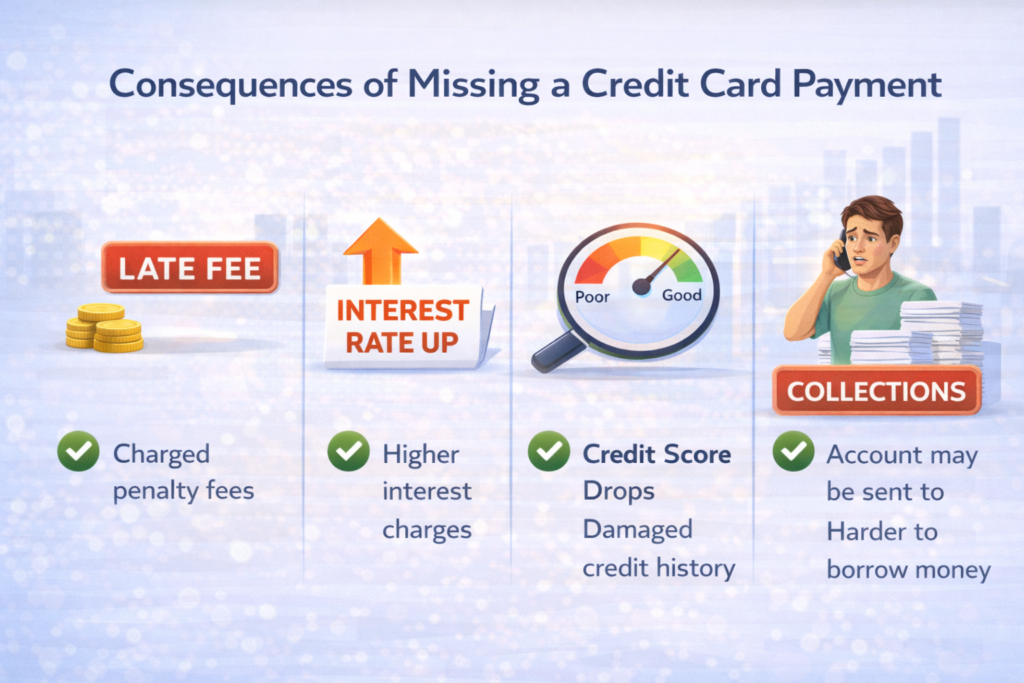
One of the first consequences of missing a payment is a late fee. Credit card companies typically charge a fee each time a payment is late. If you miss multiple payments, these fees can add up quickly.
In addition to late fees, you may lose any promotional interest rates you were receiving. Some cards also increase your regular interest rate after missed payments. This means your balance becomes more expensive over time, making it harder to pay off.
How It Affects Your Credit Score
Payment history is one of the most important parts of your credit profile. Because of this, a missed payment can have a noticeable effect on your credit score.
If your payment is reported as 30 days late, your score may drop. The amount of the drop can vary depending on your overall credit history. Someone with a long record of on-time payments may see a smaller drop than someone who already has past issues.
Late payments can remain on your credit report for several years, even after the balance is paid. Their impact on your score may lessen over time, but they can still be visible to lenders.
What Happens After 60 or 90 Days
If you continue missing payments, the situation becomes more serious. At 60 days late, additional penalties may apply, and your credit score can drop further. At 90 days or more, the account may be considered seriously delinquent.
The lender may reduce your credit limit, close the account, or send the debt to a collection agency. Accounts in collections can have a significant negative impact on your credit profile and make borrowing much more difficult.
Impact Beyond Your Credit Score
A missed payment does not only affect your credit score. It can also affect your relationship with the lender. Future applications for higher credit limits or new credit products with the same company may be denied.
Higher interest rates can increase the total amount you owe, making it harder to get out of debt. Over time, this can create financial stress and limit your options.
Can One Missed Payment Ruin Your Credit?
One missed payment does not permanently ruin your credit, but it can cause noticeable damage, especially if your credit history was previously strong. The key factor is how quickly you respond.
Paying the overdue amount as soon as possible can prevent the issue from becoming more serious. The longer the payment remains unpaid, the greater the negative impact.
What to Do If You Miss a Payment
The most important step is to make the payment as soon as you realize it was missed. Acting quickly can sometimes prevent the late payment from being reported to credit bureaus.
You can also contact the card issuer. If you have a good history, they may offer a one-time courtesy adjustment, such as removing the late fee or not reporting the payment as late. This is not guaranteed, but it can be worth asking.
Setting up automatic payments or reminders can help prevent future missed payments. Building better systems around your finances can protect your credit going forward.
How to Prevent Future Missed Payments
Prevention is always easier than repair. Keeping track of due dates, setting calendar alerts, or using automatic payments can help ensure you stay on schedule.
Keeping your balances manageable also reduces the risk of missing payments. When debts feel overwhelming, it becomes harder to stay organized. Staying within your budget helps maintain control.
Long-Term Recovery
If a late payment does appear on your credit report, recovery takes time. Consistently making on-time payments after the mistake helps rebuild your credit history. Over time, newer positive information can outweigh older negative marks.
Lenders often look at overall patterns. Showing that a missed payment was an exception rather than a habit can improve your financial standing in the long run.
Final Thoughts
Missing a credit card payment can lead to fees, higher interest, and damage to your credit score. However, acting quickly and improving your habits can reduce long-term harm.
Building strong credit takes time, but avoiding late payments is one of the most important habits to develop.
🔗 Internal Links Used
- Link to Article 3: What Affects Your Credit Score the Most?
- Link to Article 6: How to Build Credit From Scratch