
Introduction
When learning about credit cards, one of the first distinctions you may encounter is between secured and unsecured credit cards. At first glance, both types look similar and can be used in the same way for everyday purchases. However, they are designed for different financial situations and types of borrowers.
Understanding the difference between secured and unsecured credit cards can help you choose the right option based on your credit history, financial goals, and current situation. Making the right choice can also affect how quickly you build or improve your credit profile.
What Is a Secured Credit Card?
A secured credit card requires a security deposit when you open the account. This deposit usually becomes your credit limit and serves as protection for the lender.
For example, if you deposit $300, your credit limit is often $300. You can then use the card to make purchases and must repay the borrowed amount according to the card’s terms.
Secured credit cards are typically designed for people who are new to credit or rebuilding their credit after past problems. Because the deposit reduces the lender’s risk, approval is often easier compared to traditional credit cards.
What Is an Unsecured Credit Card?
An unsecured credit card does not require a deposit. Instead, approval and your credit limit are based on your credit score, income, and overall financial profile.
Most standard credit cards are unsecured. Lenders rely on your credit history to decide how much risk you represent. If you have a strong credit record, you are more likely to be approved and receive a higher credit limit.
The Main Difference: The Security Deposit
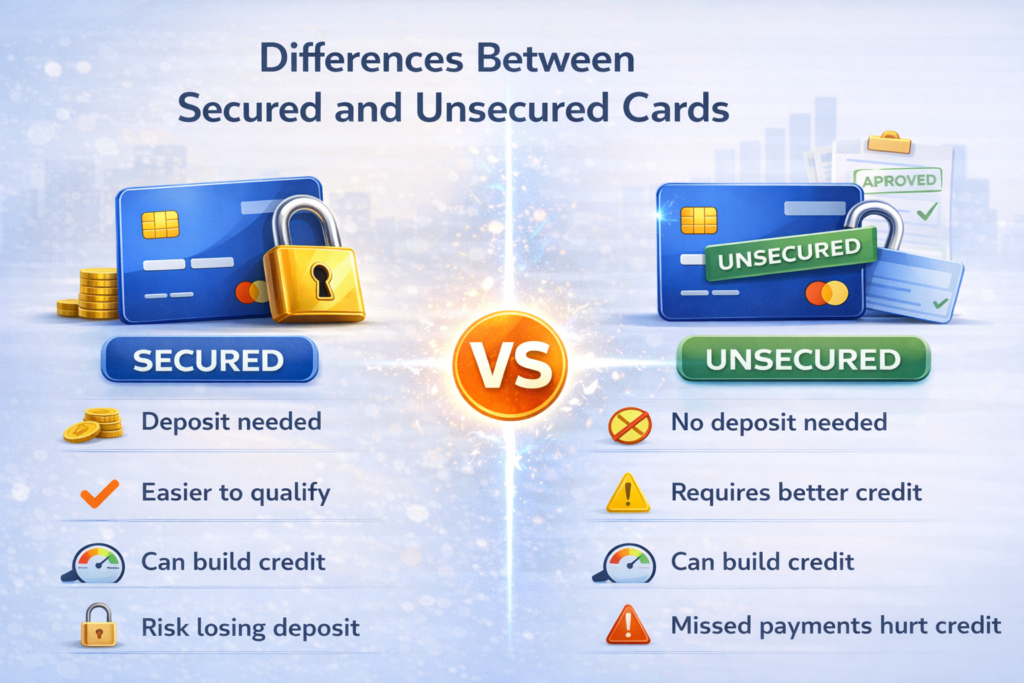
The biggest difference between secured and unsecured cards is the security deposit. With a secured card, your own money is used as collateral. With an unsecured card, the lender takes on more risk because there is no deposit.
This deposit does not mean you are simply spending your own money, like with a prepaid card. You are still borrowing and repaying funds, which is why secured cards can help build credit.
Approval Requirements
Secured credit cards are usually easier to get approved for. They are often used by people with little or no credit history, or by those who are working to recover from a low credit score.
Unsecured credit cards generally require a fair to good credit score. Lenders want to see a record of responsible borrowing before offering credit without a deposit.
Credit Building Potential
Both secured and unsecured credit cards can help build credit if the issuer reports your activity to the major credit bureaus. The key factors are the same for both:
- Paying on time
- Keeping balances low
- Using the card regularly but responsibly
From a credit-building perspective, there is no disadvantage to a secured card if it is managed well.
Risk and Responsibility
With a secured card, you risk losing your deposit if you stop making payments. With an unsecured card, there is no deposit to lose, but missed payments can still damage your credit and lead to fees or collection actions.
In both cases, responsible use is essential. A credit card, whether secured or unsecured, can help or hurt your credit depending on how it is managed.
Can You Move From Secured to Unsecured?
Many secured credit card issuers review accounts after a period of responsible use. If you consistently make on-time payments and manage the card well, you may qualify to upgrade to an unsecured card. When this happens, your deposit is typically returned.
This makes secured cards a useful stepping stone toward traditional credit products.
Which One Should You Choose?
A secured credit card may be a better option if you have no credit history or a low credit score and cannot qualify for an unsecured card. It provides a way to start building credit in a controlled manner.
An unsecured credit card may be the right choice if you already have a fair or good credit score and can be approved without a deposit.
Final Thoughts
Secured and unsecured credit cards serve different purposes, but both can help build credit when used responsibly.
The key difference is the security deposit. Choosing the right card depends on where you are in your credit journey.