
Introduction
Your credit report is one of the most important financial documents connected to your life, yet many people never look at it until something goes wrong. This report contains detailed information about your credit history, including loans, credit cards, payment patterns, balances, and any negative marks. Lenders, landlords, and sometimes even insurance companies use this information to evaluate financial reliability.
Checking your credit report regularly is not just for people with financial problems. It is a smart habit that helps you understand where you stand, monitor your progress, and catch mistakes or fraud early. The best part is that in the United States, you have the legal right to access your credit report for free.
What a Credit Report Actually Shows
A credit report is a record of how you have managed borrowed money over time. It includes identifying information such as your name, address history, and Social Security number (partially hidden for security).
More importantly, it shows your credit accounts, such as credit cards, auto loans, student loans, and mortgages. Each account usually lists the credit limit, current balance, payment history, and account status. If you have missed payments, those may also appear.
The report may also include collection accounts, public records related to debt, and a list of recent credit inquiries. Together, these details form the foundation that credit scores are built on.
Who Maintains Your Credit Reports
There are three main credit bureaus in the United States: Experian, Equifax, and TransUnion. These companies collect data from lenders and create individual reports.
Not all lenders report to all three bureaus, which is why your reports can sometimes look slightly different. Reviewing all of them gives you the most complete picture of your credit profile.
Why Checking Your Credit Report Is So Important
Many people assume their credit report is accurate, but mistakes are more common than expected. A payment marked late by error or an account that does not belong to you can lower your credit score unfairly.
Regularly checking your report helps you:
- Detect identity theft early
- Spot incorrect late payments
- Make sure closed accounts are reported correctly
- Track how your financial habits affect your record
It also helps you prepare before applying for a loan, so you are not surprised by something a lender sees.
How to Get Your Credit Report for Free
The process is straightforward, but it is important to use the official source.
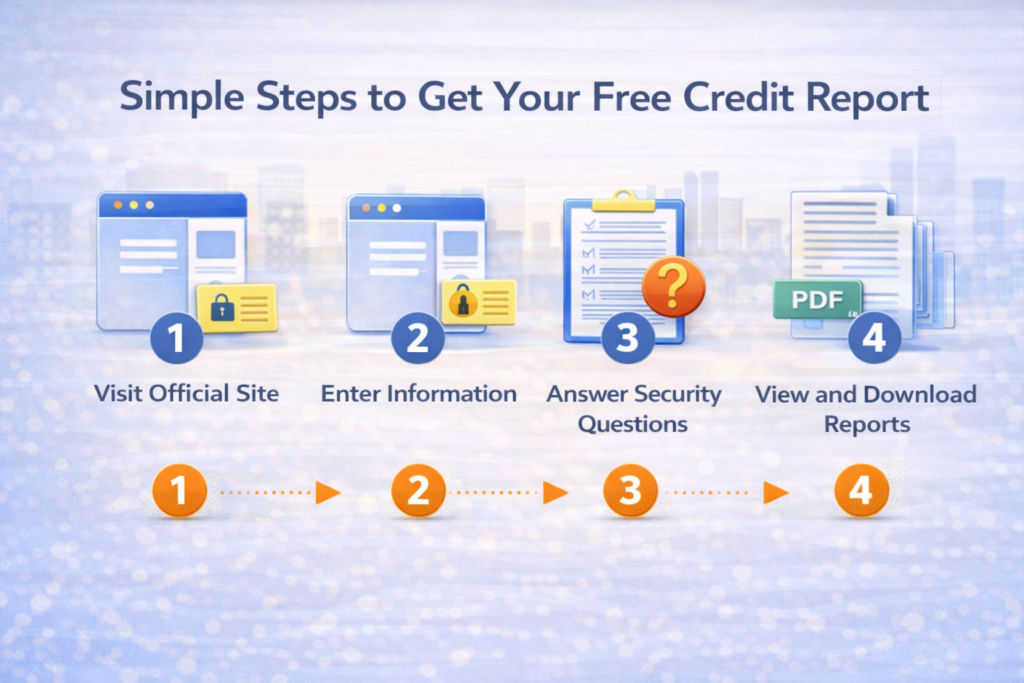
Step One: Visit the Official Website
There is one government-authorized website that allows you to request free credit reports from all three bureaus. Avoid sites that look similar but try to sell paid services.
Step Two: Provide Personal Information
You will need to enter basic details such as your full name, current address, previous addresses, date of birth, and Social Security number. This is necessary to verify your identity.
Step Three: Answer Security Questions
To protect your information, you may be asked questions based on your credit history. These can include past loan amounts or previous addresses.
Step Four: Access and Save Your Reports
Once verified, you can view your reports online. It is wise to download or print copies for your records so you can review them carefully.
How Often Should You Check?
Checking at least once a year is recommended. Some people check more frequently, especially if they are working on improving their credit or have experienced identity theft before.
Spacing out your checks throughout the year can help you monitor changes and catch problems sooner.
What to Look For When Reviewing
When reading your report, go through it slowly. Look for accounts you do not recognize, incorrect balances, or late payments that you believe were made on time.
Also check that your personal information is correct. Errors in addresses or names can sometimes cause files to mix with someone else’s information.
Pay attention to credit inquiries as well. Too many unfamiliar inquiries may be a sign of fraud.
What to Do If You Find an Error
If you notice incorrect information, you have the right to dispute it. You can contact the credit bureau that provided the report and explain the issue. Supporting documents, such as payment confirmations, can help your case.
The bureau must investigate and either correct or remove information that cannot be verified. This process helps ensure your report reflects accurate data.
How This Habit Helps Your Financial Future
Regularly checking your credit report gives you control over your financial story. It allows you to fix issues before they affect loan approvals and helps you understand how your actions shape your credit profile.
Being informed reduces stress and puts you in a stronger position when making major financial decisions.
Final Thoughts
Checking your credit report for free is one of the simplest but most powerful financial habits you can develop. It helps you stay informed, detect problems early, and ensure your credit history reflects your true behavior.
Your credit report tells lenders who you are financially. Reviewing it regularly ensures that story is accurate and working in your favor.